Rolling, slitting and dimensional control
Raytron Showcases Copper-Clad Aluminum Wire, Fully Clad Strip and Precision Foil at CCD2026
A copper surface and an aluminum core create engineering value only after resistance, temperature rise, joining, mechanics, environment and lot consistency are validated together.
Date
August 24-26, 2026 (registration on August 24; main program on August 25-26)
Venue
Sheraton Ningbo Hotel, Ningbo, Zhejiang, China
Booth
Company Exhibition Area
The 2026 Copper Composite Materials Developer Forum was held in Ningbo, Zhejiang, from August 24 to 26, with registration on August 24 and the main conference and exhibition program on August 25 and 26. Raytron New Energy (Zhejiang) Co., Ltd. presented three product platforms: copper-clad aluminum round and flat wire, fully clad CCA strip and embossed strip, and CCA precision foil.
The forum brought together research institutes, material manufacturers, equipment suppliers and application companies. For Raytron, the most valuable conversation was not a one-line answer to "Can CCA replace copper?" It was a structured review of dimensions, current, voltage drop, temperature rise, forming, joining, environment and lot consistency to determine whether the material fits, how a sample should be designed and how validation should proceed.
CCA Round and Flat Wire
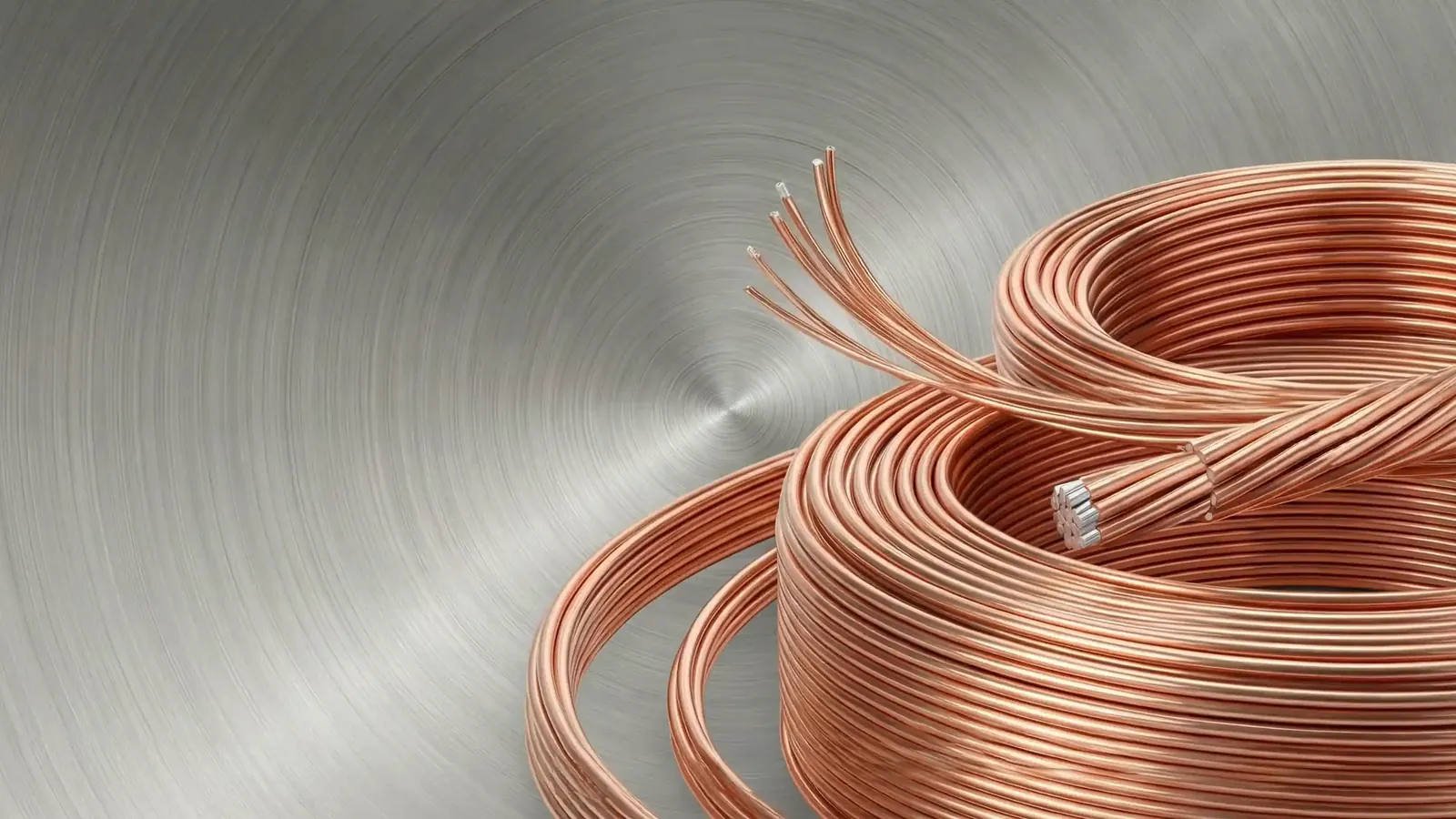
Raytron's CCA wire platform includes round and flat geometries. Copper ratio, core material, conductivity, temper, dimensions, tolerances, tensile strength and elongation can be evaluated for the target project. Potential applications include wire and cable, communications, automotive wiring, electronic interconnections, coils and other conductive structures requiring lower mass or copper consumption.
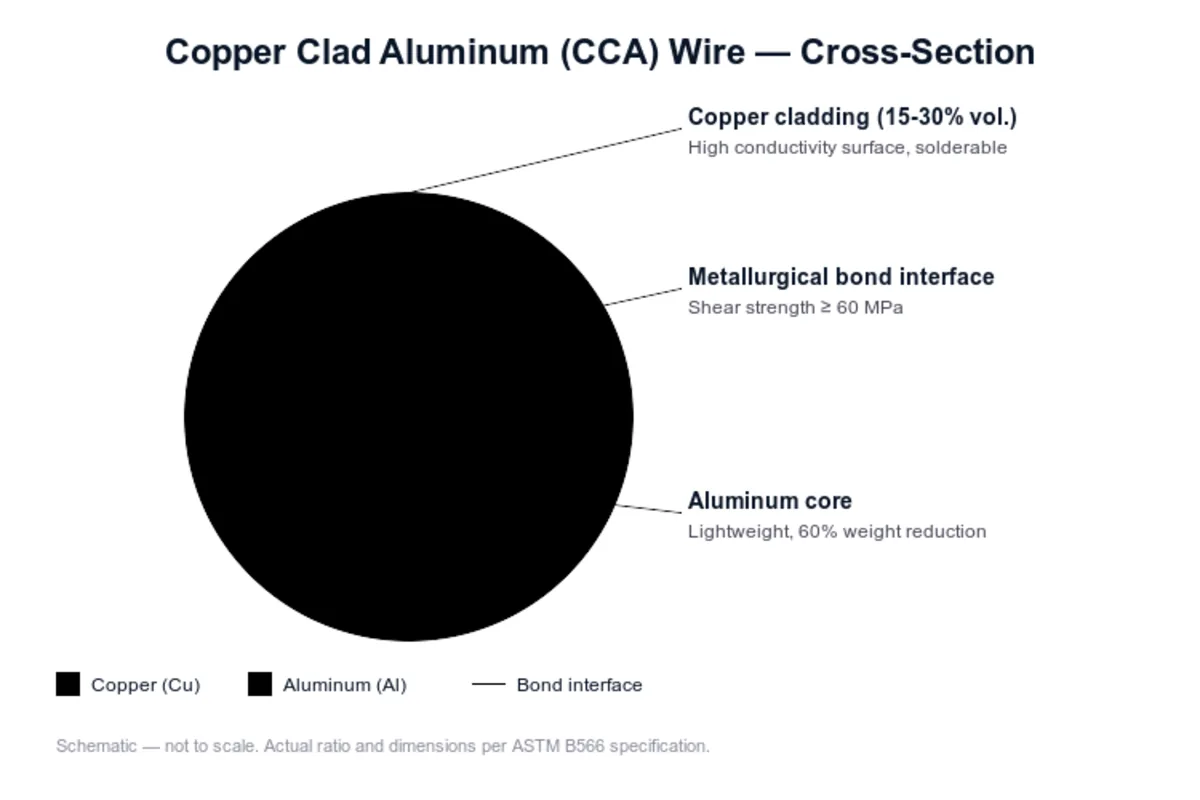
Manufacturing and inspection priorities include continuous copper coverage, concentricity or cladding symmetry, bond-interface stability, surface quality, dimensional consistency and compatibility with drawing, rolling, tinning, insulation, welding and crimping.
Fully Clad CCA Strip and Embossed Strip
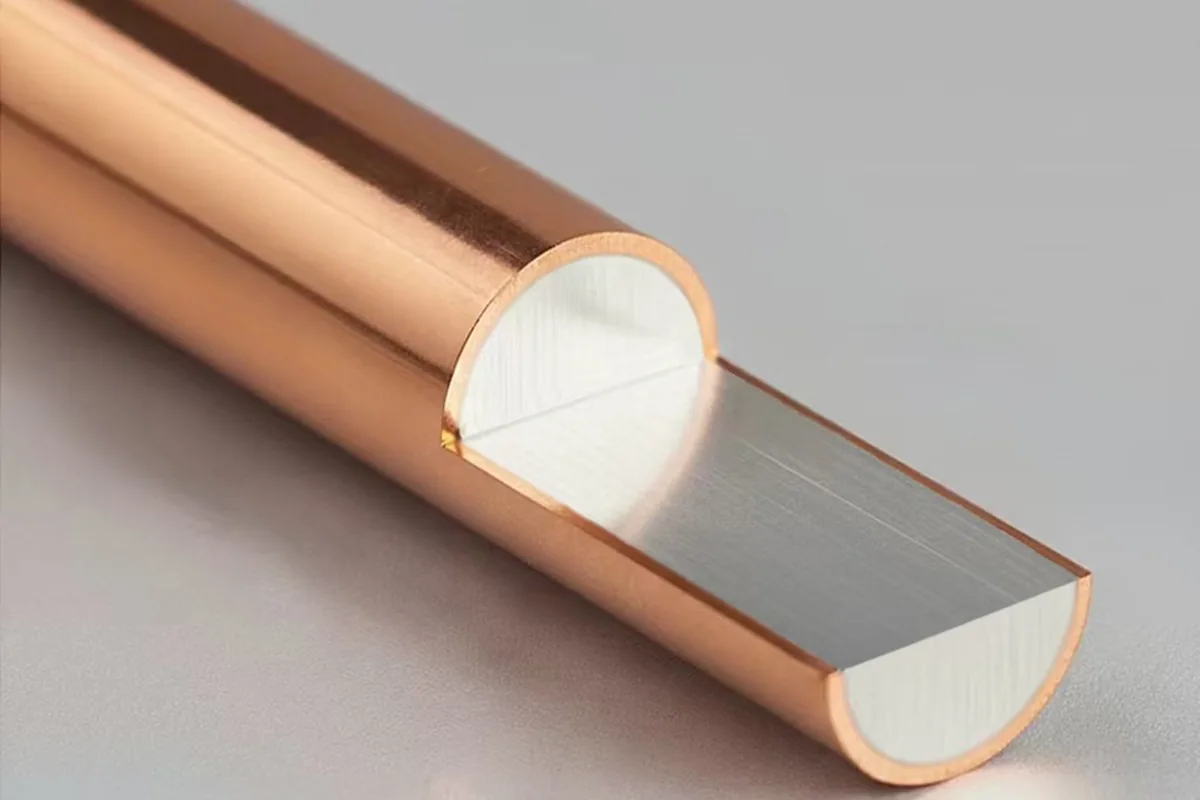
Fully clad CCA strip is produced through multi-pass precision rolling of clad feedstock. The aluminum core remains continuously enclosed by copper, and the material can be supplied in coil form for slitting, stamping, laminating or automated downstream processing. Project specifications may define total thickness, width, copper ratio, temper, surface, edge condition and coil weight.
Embossed strip introduces a controlled surface structure for contact, bonding, lamination, thermal-management or other functional requirements. Flatness, transverse gauge variation, camber, burr, surface cleanliness and coil-to-coil consistency remain critical production controls.
CCA Precision Foil
CCA precision foil is developed for thin-gauge, high width-to-thickness-ratio and high-consistency requirements. Potential applications include electronic shielding, flexible conductive components, lightweight clad foil, precision die-cut or stamped parts and downstream processes requiring a functional copper surface at lower weight.
As gauge decreases, transverse thickness variation, flatness, edge burr, surface cleanliness, interface condition and winding defects become more significant. Sample evaluation should therefore include cross-width data, edge and surface inspection, and post-forming or post-joining condition rather than only average thickness and conductivity.
Not an Unconditional One-for-One Copper Replacement
At the same geometry, CCA and copper have different resistance, density, thermal behavior and mechanical response. Under an equal-resistance comparison, cross-section may need to increase. Under an equal-weight comparison, a different dimensional and economic result appears. The correct design depends on whether space, mass, copper consumption, conductivity, strength or processing is the dominant constraint.
Raytron therefore defines the comparison basis first and then builds the sample and test plan. A material architecture proceeds to pilot and mass production only after electrical, thermal, mechanical, joining, environmental and manufacturing-consistency requirements are met.
From Forum Discussion to Sample Validation
- Confirm copper-ratio definition, aluminum core, product form, dimensions and temper;
- Calculate density, conductivity, resistivity, mass per unit length and comparison with the current material;
- Confirm welding, crimping, stamping, slitting, tinning, insulation or other downstream processes;
- Define incoming, in-process, finished-product and reliability tests;
- Set sample, pilot, audit, change-control and production-release gates;
- Use approved drawings, technical agreements and batch inspection records as the delivery basis.
Raytron Manufacturing and Development Foundation
Founded in 2012, Raytron operates 13 precision rolling lines with annual capacity of approximately 15,000 metric tons under an ISO 9001 quality management system. The company has accumulated 28 patents and related technical experience in precision flat wire, PV ribbon and clad materials.
Clad-feedstock preparation, drawing, precision rolling, annealing, slitting, inspection and batch traceability support the custom development, sampling and production supply of round wire, flat wire, strip and precision foil. Project capability remains subject to the target specification and formal engineering review.
Booth and Exhibits
Frequently Asked Questions
What does "fully clad" mean?
Should copper ratio be specified by weight or volume?
Can precision foil be stamped or welded directly?
How does a joint development project begin?
Submit a Specification to Start the Review
Share your basics and current specification highlights. Raytron engineering will run an initial application, electrical, thermal, mechanical, processing, joining and environmental review.
Final performance and delivery are subject to mutually confirmed drawings, technical agreements, test methods and lot inspection data.