
Engineering application guide
Conductors for High-Temperature and Corrosive Environments
Describe the temperature profile, chemical medium and mechanical duty of the conductor. Include the fluid or gas, concentration, exposure time, joining method and the role of any insulation or pressure barrier. These details help separate conductor requirements from the requirements of the complete sensor or assembly.
Send Your Component and Exposure RequirementsOn this page
Identify the lead, surface and connection
A sensor lead includes a metallic current path, an outer surface, insulation and a joint. NCC offers a copper core with a nickel surface; CCS has a steel core with a copper surface and answers a different mechanical/electrical question.
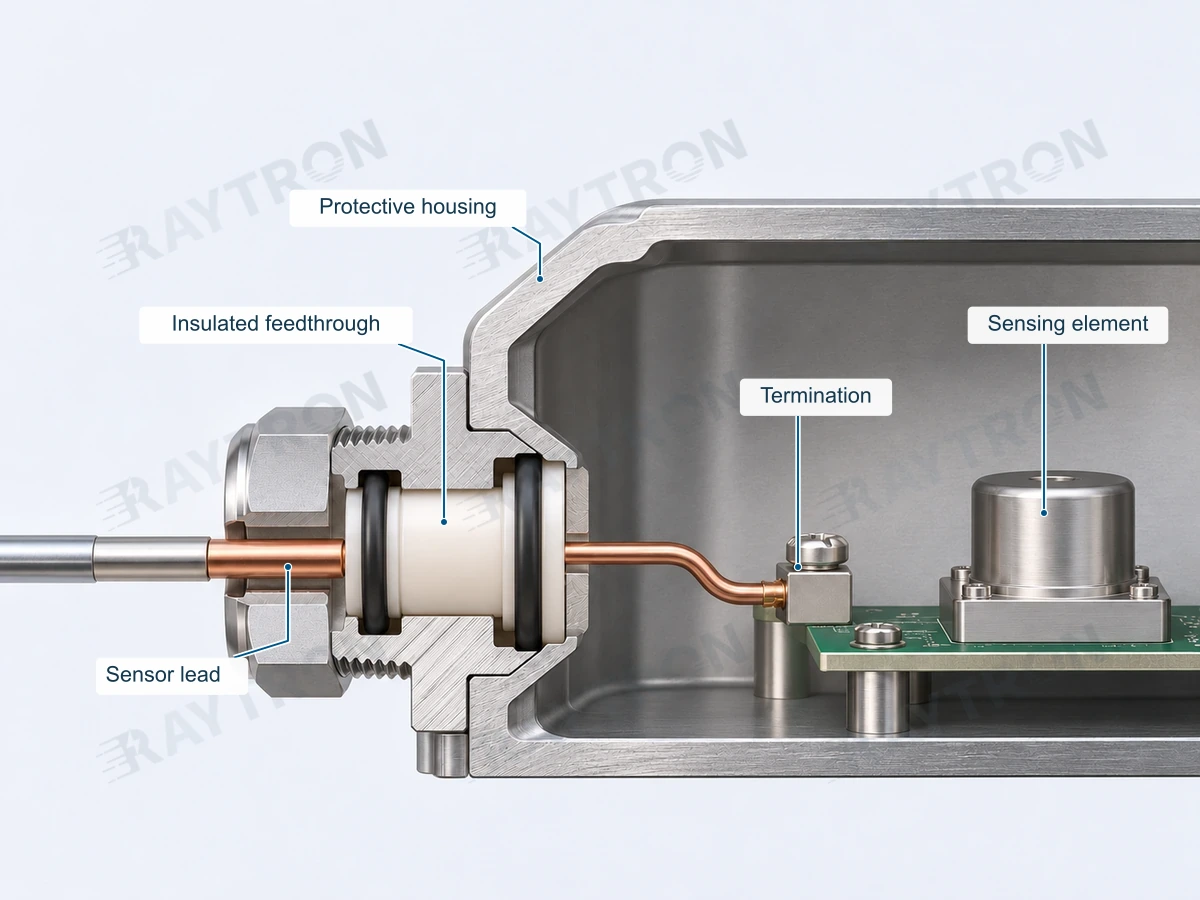
Define chemical species and concentration, gas or liquid exposure, temperature history, cut edges and the mating metals. The sensor-conductor route develops these inputs; MWD downhole sensors also require the complete pressure-boundary and termination review.
Identify the conductor or connection
NCC provides a nickel outer layer over a copper core; CCS uses a steel core and copper surface. Choose the candidate for the actual electrical and mechanical duty, then define the layer structure and product form.
Specify the exposure
Include the medium, concentration, temperature and duration, plus pressure only where the component design requires it. Add vibration or fatigue, insulation and joining requirements. A wire material name does not establish the pressure rating of a sensor or assembly.
Sample checks
Use corrosion, electrical and mechanical checks for the actual formed part and its exposed edges and joints. Include the acceptance methods and component specification with the inquiry.
Use general environment review for chemical, thermal-cycle and fatigue records, or MWD downhole review for pressure/media and interface responsibility. Compare NCC round wire with CCS round wire only for the specified electrical and mechanical role.

Application specification record — open worksheet
Record your project requirements and observations, then download or include them in an inquiry.
| Item | Information / units | Your input |
|---|---|---|
| Location and exposure | Surface installation or downhole sensor; medium/concentration and exposed ends/joints | |
| Service history | Temperature and pressure profile, time/cycles, bending and insulation boundary | |
| Supplied construction | Wire/strand/strip/foil, layer and surface, connection and specified test records |
Other formats and preview
Save or restore a draft
Drafts stay in this browser. Clear inputs also removes the saved draft.
Worksheet version: RT-RFQ-WORKSHEET-1.