Engineering application guide
Wire Materials for Power, Signal and Screen Applications
Choose the conductor duty first. A concentric neutral, an MV metallic screen and a signal conductor need different electrical, mechanical and connection inputs. Start with the application below.
Send Your Cable Conductor RequirementsOn this page
Locate the material in the assembly
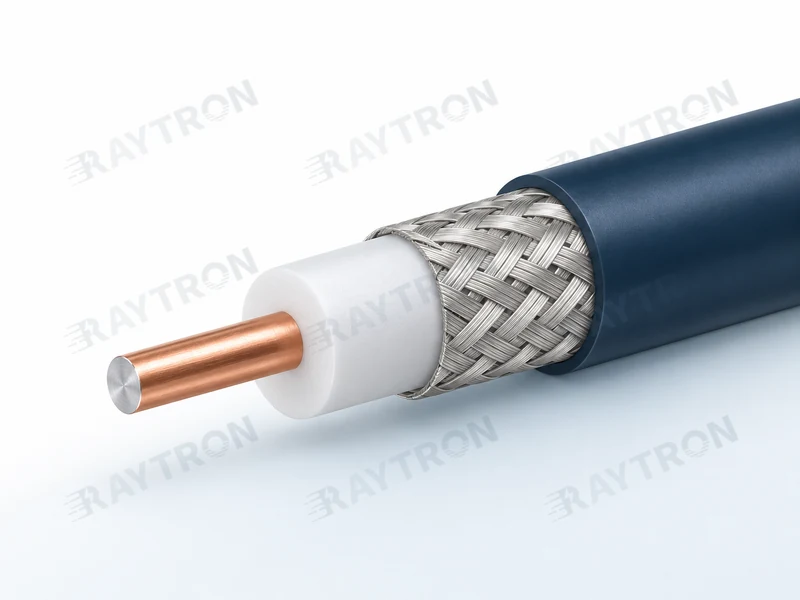
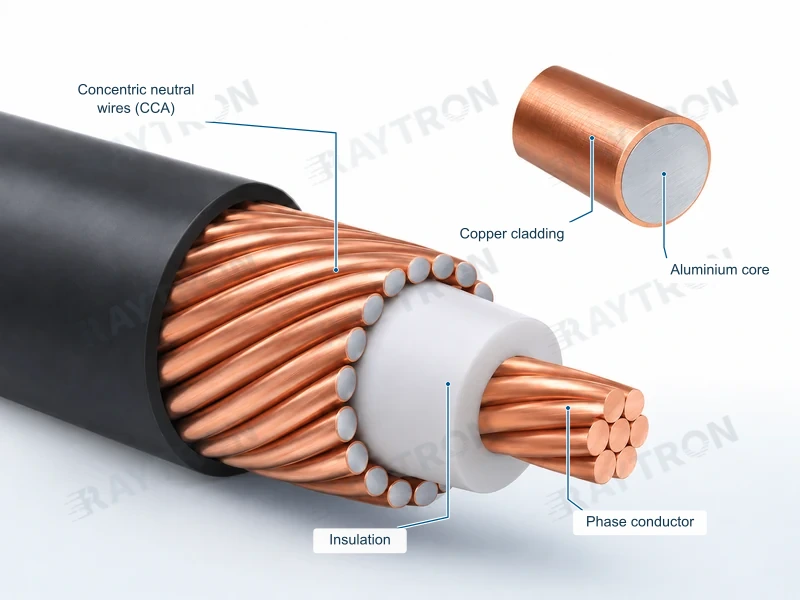
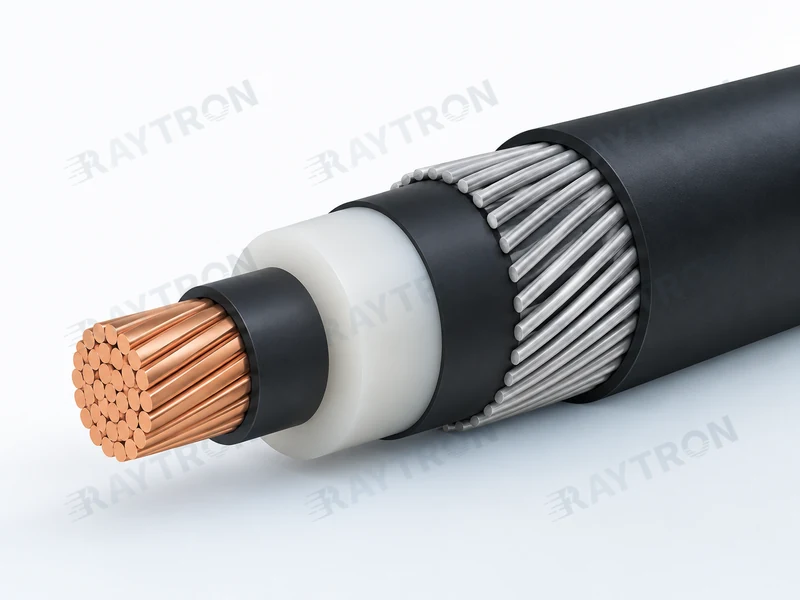
Cable manufacturers: choose the conductor's job
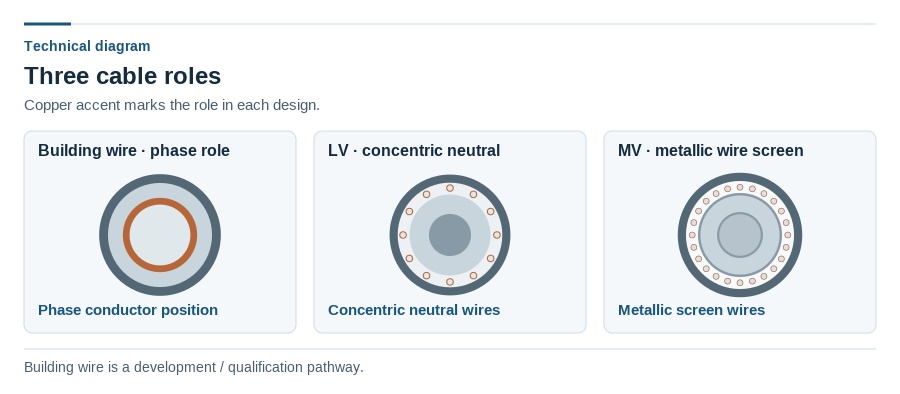
Choose the installed role before selecting a metal. Start with the existing design and the information below; the application page identifies the material and finished-cable checks.
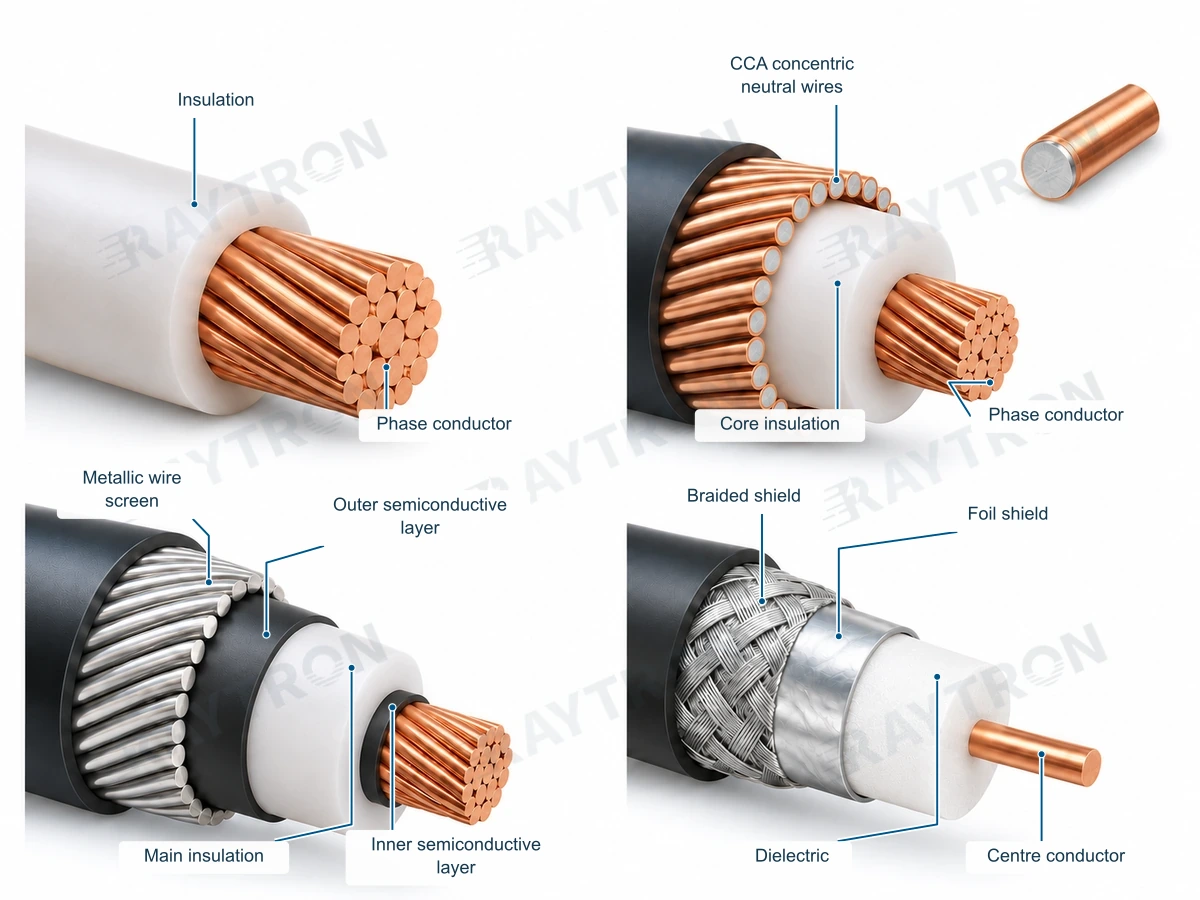
Power-cable phase conductor
Target market/cable specification, permitted material and finished-cable approval route
Product specification referenceLV concentric neutral
Neutral position, actual metallic area, R20 target and project specification
Product specification referenceMV metallic screen
Screen geometry, fault current/duration, connection and cable/accessory limits
Product specification referenceCoaxial / RF centre conductor
Frequency band, conductor/cable geometry, DC duty, attenuation and connectors
Product specification referenceData cable / DC power duty
Target category/market, whether copper is required, DC power and thermal duty
Product specification referenceGrounding / tracer / mechanical duty
Installation role, fault duty or tracer signal, environment and connections
Product specification referencePhase-conductor material route
Start with the target cable standard, market and installed phase-conductor requirement. Copper round wire provides a full-copper construction; CCA is evaluated only where the specified material route permits it for that duty.
A concentric-neutral reference is a different installed role. Use the utility specification guide for the stated phase-conductor scope and any historical or trial provisions.
Compare the complete cable
CCA and CCS have different core metals and electrical/mechanical behavior. Select the core material, copper layer and geometry for the required resistance, signal behavior and mechanical duty.
Scroll horizontally to read all columns. Keep the conditions and units with each value.
| Duty | Inputs that determine the wire specification |
|---|---|
| LV concentric neutral | Target conductor resistance at 20°C, actual metallic area, wire count and lay, applicable utility document issue and copper fraction basis |
| MV metallic screen | Complete screen resistance, screen-assigned fault current and duration, bonding, geometry and terminations |
| RF / coaxial signal conductor | Frequency band, impedance or attenuation, copper layer, cable geometry and termination |
| CAT 5e / CAT 6 paired-data cable | Finished-cable transmission requirements, DC resistance and unbalance, connector construction and any PoE voltage-drop / temperature-rise duty |
| Strength or grounding conductor | Tensile duty and span, strand construction, resistance, joint design and installation environment |
Communication conductors and shielding tape
The communication cable application separates RF and data/DC procurement routes. For CAT 5e / CAT 6 and CCA shielding tape, see section 9 of the CCA procurement guide. A metallic shielding tape and the cable’s core conductors perform different functions; select their construction and connections separately.