
Copper Clad Aluminum Conductors
Copper-Clad Aluminum Flat Wire
View specificationsRequest a quote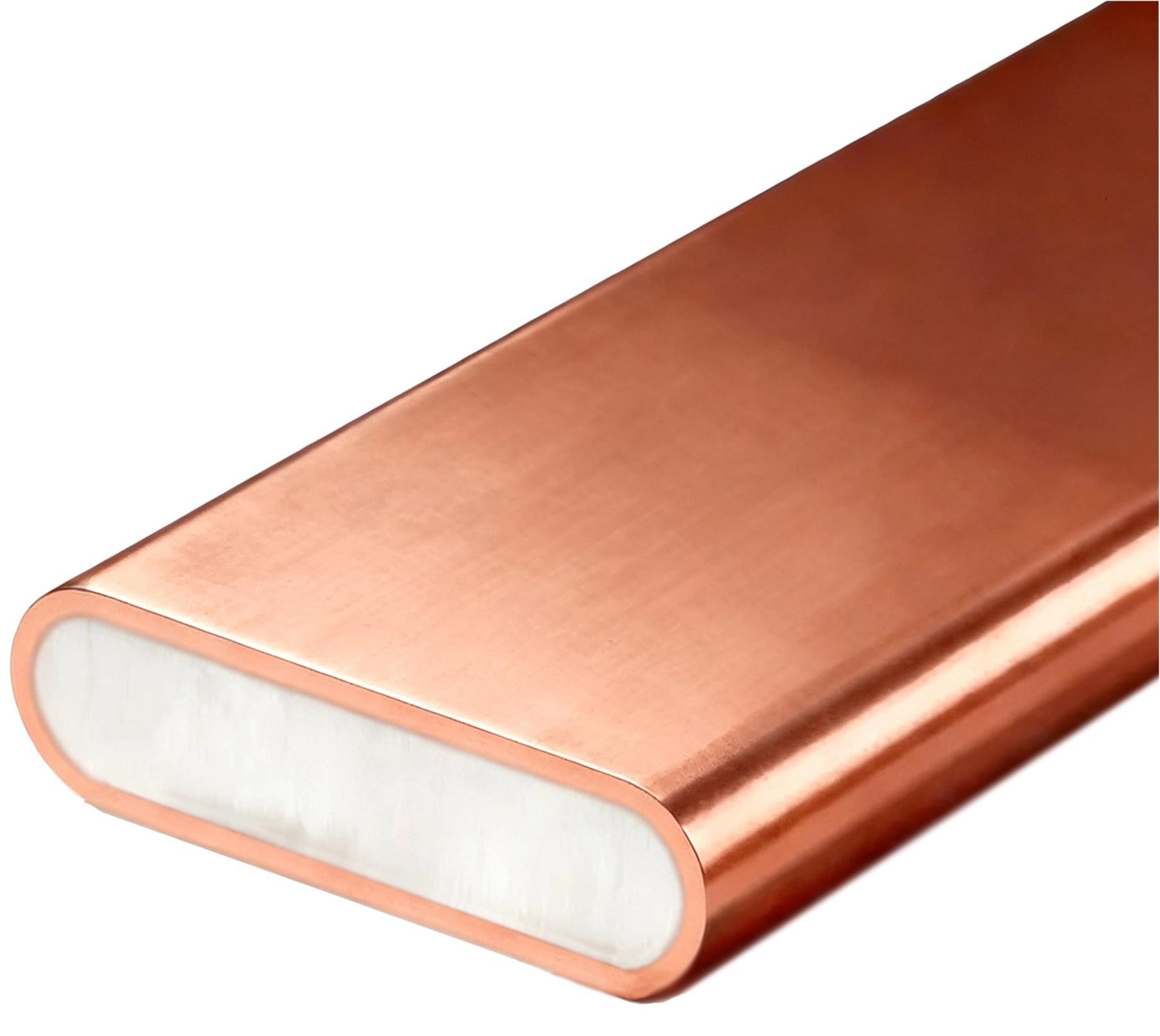
CCA flat wire combines an aluminum core with copper cladding in a rectangular section. It is an option for coils and compact conductive parts where lower conductor weight matters. Compare the finished winding resistance, available space and connections when selecting it against copper.
On this page
Construction and specification
Scroll horizontally to read all columns.
| Item | Specification |
|---|---|
| Material construction | Aluminum core with copper cladding; copper proportion is expressed on a mass or volume basis |
| Product form | Flat wire |
| CCA flat-form platform boundary | Width up to 6 mm. Width, thickness, copper proportion, temper, corners and surface are reviewed as one profile; the width boundary does not approve every combination. |
Specification design factors
Drawing-defined specification
Geometry and performance
- Width, thickness and corner shape define the conductor envelope.
- Camber, twist and bend direction affect winding and automated feeding.
- The metal section and any insulation build occupy separate parts of the finished envelope.
Selection and processing
Set width, thickness, corner radius and bend direction around the winding window. Compare copper and CCA at the required finished resistance. Include whether the supply request concerns bare conductor or an insulation process; the insulation build changes the finished section.
Application design reference
Track lighting flat conductorsMultiple precision flat profiles, reviewed by width, thickness and contact-face requirement for each track design.
Material and form references
Rolled strip, foil and flat wire are defined by material, temper, section and finished-part requirements. Their geometry and test methods differ from those of round wire.
Standards and product formsProduct questions
How does a flat section behave in bending and winding?
Width, thickness and corner geometry define the conductor envelope. Bending about the long and short edges produces different strains and springback. Bare metal and insulated finished dimensions occupy different portions of the available winding space.
Is copper proportion the same as electrical conductivity?
No. Copper proportion describes a mass, volume or area basis. Conductivity describes electrical behavior under stated measurement conditions. The supplied construction identifies both, together with section, material condition and resistance.
How are width and thickness related to the finished part?
The drawing pairs width and thickness and identifies corners, edge condition and temper. Separate width and thickness limits do not establish every combination. A coating or insulation build is recorded separately from the bare metal section.
Related products
Prepare your inquiry
- Width, thickness and tolerances
- Corner radius, edge condition, camber and twist
- Core and outer-layer metals, each layer or ratio, and mass or volume basis
- Surface finish or coating, joining method and inspection requirements
- Quantity, spool or coil format, packaging and delivery destination