
wire China 2026: Clad Conductor Information
September 21-24, 2026 · Shanghai New International Expo Centre, Shanghai, China · Hall E1, Booth E1F23
The September event dates have passed. This page retains Raytron’s exhibition plan; attendance has not been confirmed. Send a current conductor drawing or process question for follow-up.
Date
September 21-24, 2026
Venue
Shanghai New International Expo Centre, Shanghai, China
Booth
Hall E1, Booth E1F23
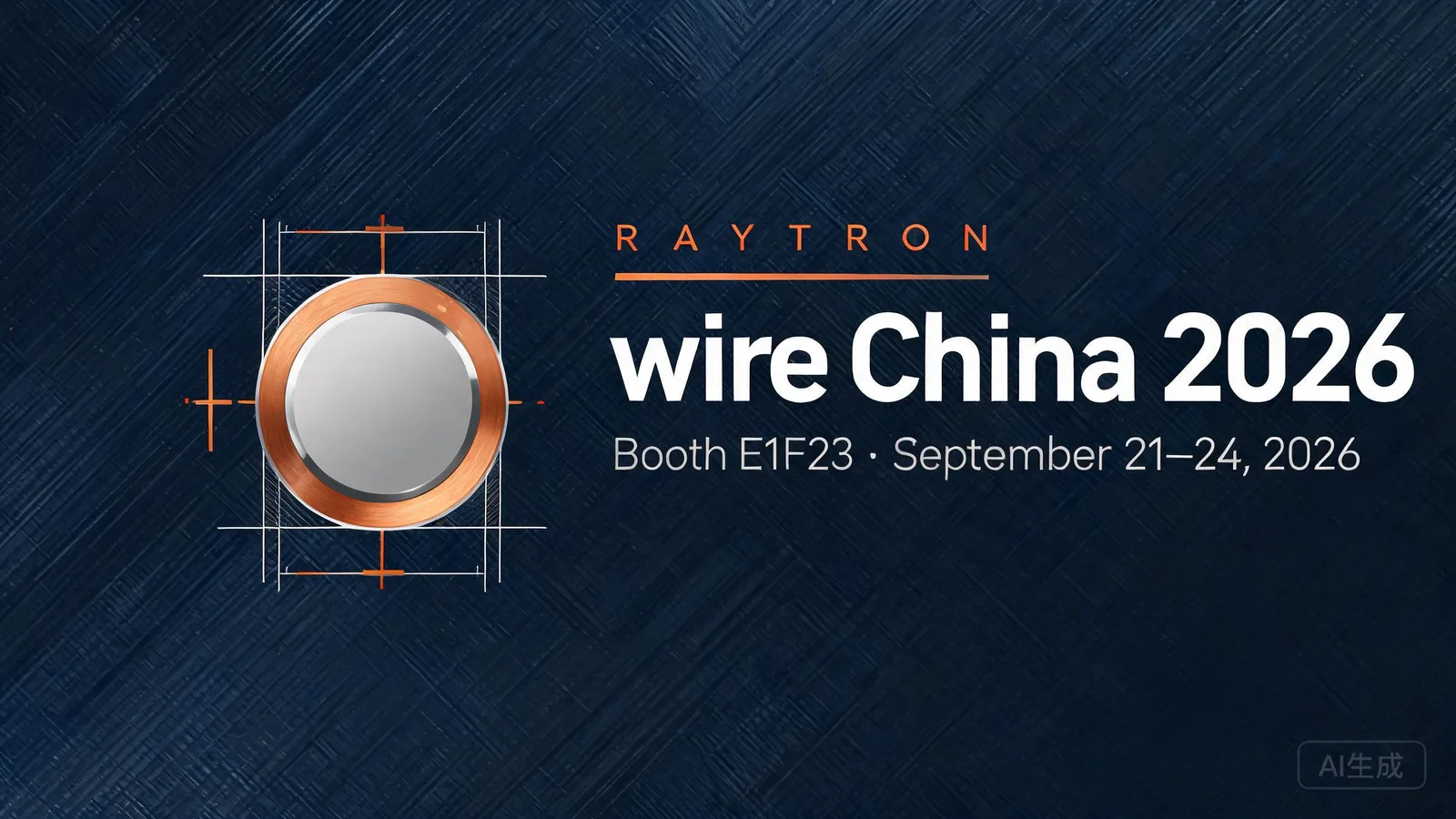
Raytron New Energy (Zhejiang) Co., Ltd. was scheduled to exhibit at wire China 2026 from September 21 to 24 at the Shanghai New International Expo Centre, Hall E1, Booth E1F23. The planned theme was "Conductors Engineered Around the Application." This page retains the original plan; it does not confirm attendance.
Materials in the exhibition plan
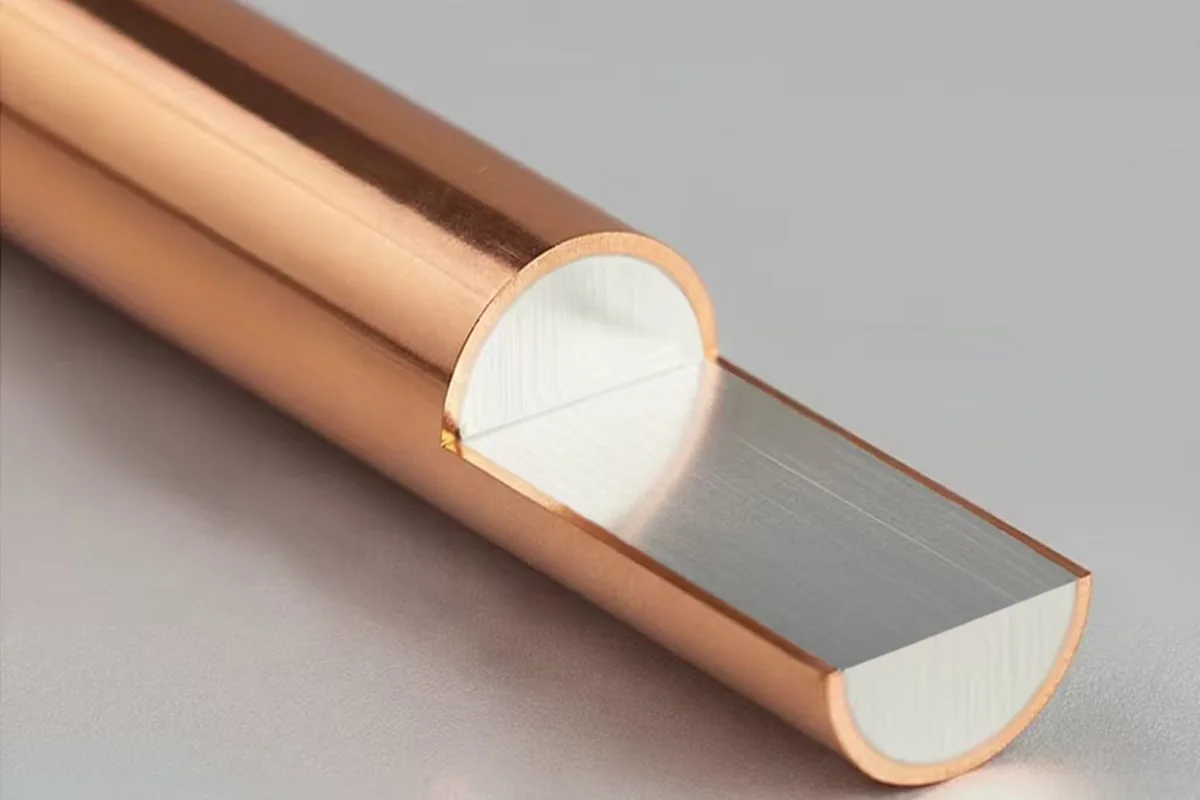
CCA and Copper-Clad Aluminum-Alloy Round Wire
Structures across copper ratio, core material and temper for building wire, automotive cable, communications, electronic interconnections and coils.
CCA Flat Wire, Strip and Foil
Precision rolling from round feedstock into fully clad flat products, with focus on width/thickness control, edge condition, surface, flatness and coil supply for flat cable, track lighting, electronic interconnections, shielding and precision stamping.
Copper-Clad Steel
Strength, copper layer, processing and corrosion considerations for grounding, tracer wire, coaxial, communication and reinforcing conductors.
Nickel-Clad Copper and Other Clad Materials
Cladding architecture, forming, welding and service limits for high-temperature electronics, battery connections and special environments.
Hot-Dip Tinned Clad Conductors
Only directions with a defined process and validation basis, with discussion centered on surface, solderability, termination and downstream manufacturing conditions.
Information for a current technical inquiry
- Product form, core/cladding or coating, dimensions and drawing revision;
- Required resistance, current/temperature, strength, joining and environmental conditions;
- The current material, problem to resolve, sample quantity and intended validation.
From a drawing to a test plan
Identify the comparison basis: equal section, equal resistance or the approved finished-part function. Record the missing inputs, candidate construction, sample requirements and test responsibilities before a quotation or trial.
Booth and Exhibits
Questions from the original event plan
Can an inquiry start without a complete drawing?
Does this page confirm Raytron attended wire China 2026?
Submit a Specification to Start the Review
Share your basics and current specification highlights. Raytron engineering will run an initial application, electrical, thermal, mechanical, processing, joining and environmental review.
Related Products and Technology
Related Events
Final performance and delivery are subject to mutually confirmed drawings, technical agreements, test methods and lot inspection data.