
RAYTRON · Narrow clad conductors
Precision Copper-Clad Aluminum Strip
Copper surfaces and an aluminum core in a precision narrow strip. Available in widths of 0.5–12 mm for drawing-defined conductive and formed parts. Bring your current strip or part drawing to compare section, weight and joining requirements.

01 / Specification
Build the section around your part
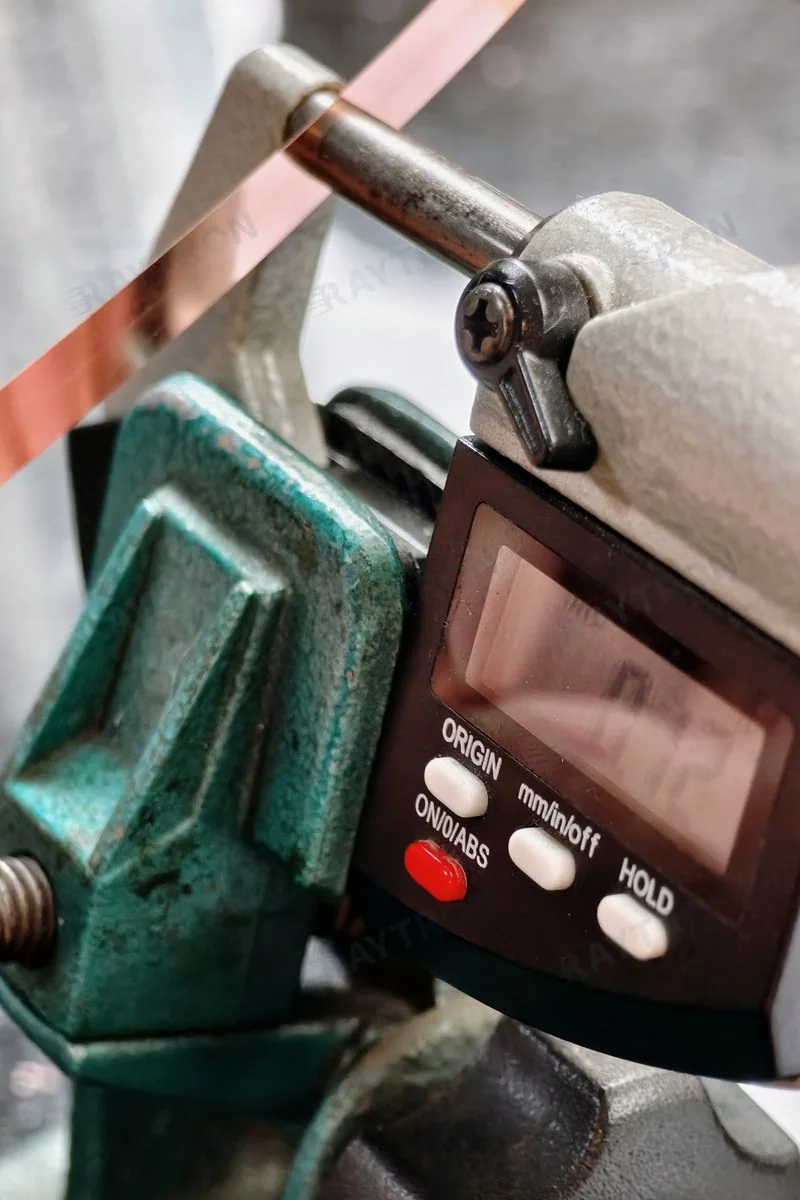
The width range describes our strip and foil capability. The delivery specification pairs width and thickness with the copper construction, temper and surface.
| Item | Specification |
|---|---|
| Available width | 0.5–12 mm |
| Material construction | Copper cladding with an aluminum core |
| Width × thickness | A paired profile, selected for the part drawing |
| Copper ratio | State volume/area or mass basis with the layer construction |
| Surface and edges | Drawing-defined copper coverage, finish and edge profile |
| Electrical specification | Finished resistance and measurement temperature |
| Roll format | Core, roll dimensions, quantity and joint requirements |

02 / Construction and process
Copper at the surface. A lighter core within.
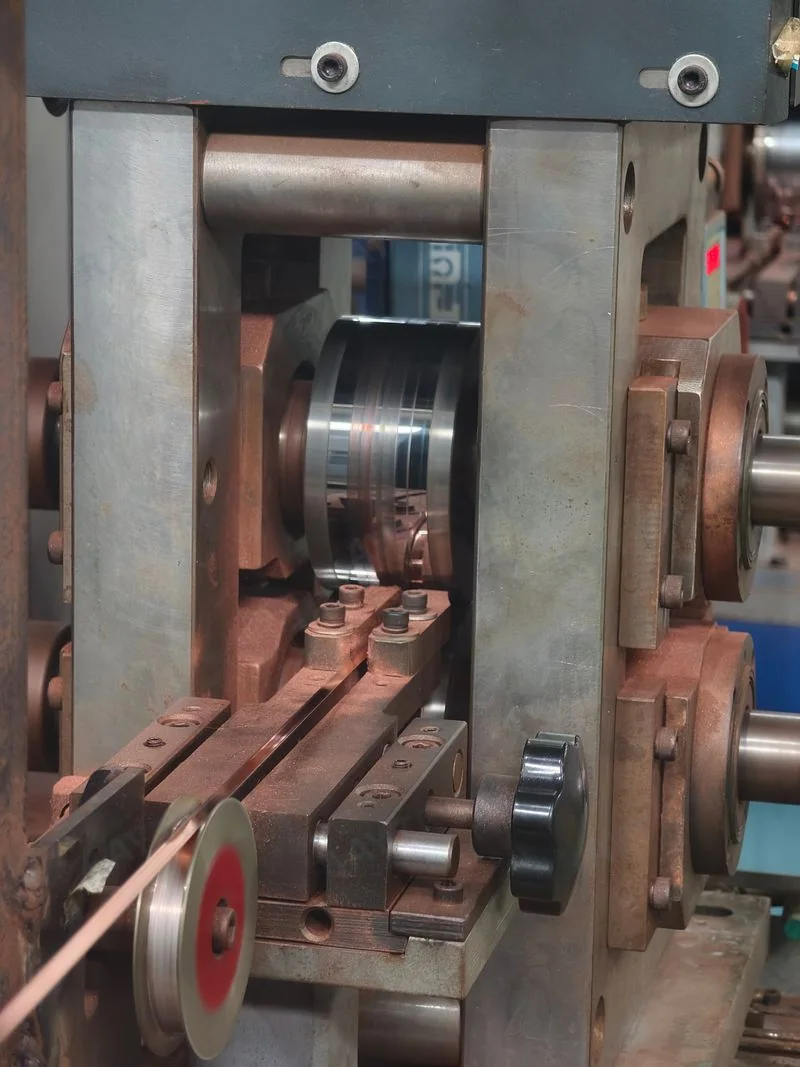
Pair width and thickness with temper, bend direction, corner profile, camber and the finished-part drawing. Edge condition and the copper surface at the joining position connect the material specification to stamping, bending or assembly.
Copper coverage and edges
Identify the copper-covered faces of the delivered section. “Fully clad” describes coverage around that section. Slitting, punching and cut ends can expose the core and are reviewed in the finished-part drawing.
Dimensions, resistance and joining
Record the bare or coated section, layer-ratio basis and resistance at a stated temperature. Test the actual connection after forming; each value describes a different part of the finished conductor.
03 / Application fit
Formed leads and narrow conductive connections
For narrow leads and connector strips, start with the actual part, contact faces and joining process. A shielding part also needs its frequency, grounding and assembly conditions. These inputs determine the useful construction for the component.
Explore the application requirements →04 / Purchasing value
Compare cost per metre or per accepted part
Start with equal geometry, equal DC resistance or the same component acceptance requirements. Keep that basis consistent when comparing actual material mass, quotations and processing yield.
Purchasing reduction = (baseline cost − candidate cost) ÷ baseline cost
The cost scope is the strip or foil being replaced. Coating, joining, insulation and other component costs are listed separately.
See the foil comparison and optional worksheet →05 / Manufacturing and documents
Connect the drawing to the delivered roll
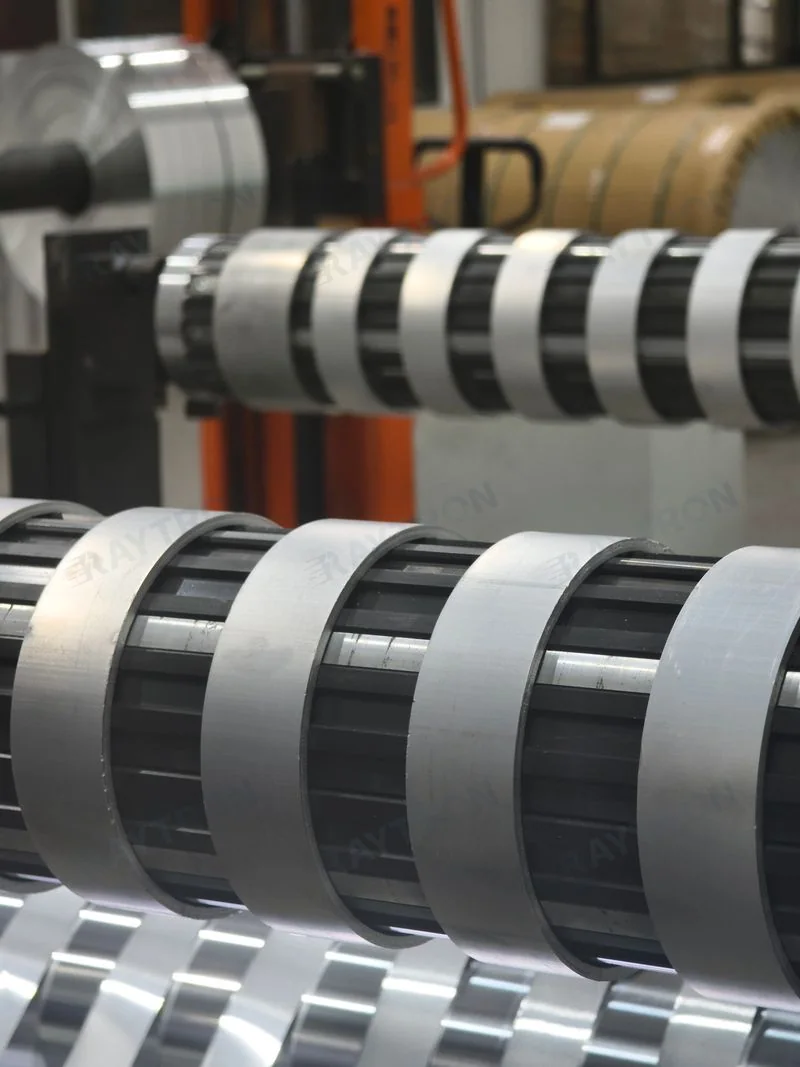
Use one specification for the layer construction, dimensional inspection, electrical checks and roll format. Identify roll dimensions, winding direction, joints and the sample quantity before arranging the trial.
Product questions
What widths can RAYTRON supply?
The available width range is 0.5–12 mm. Width and thickness are paired for the delivered profile; the complete section includes copper layers, temper and edges.
How should copper coverage be specified?
Identify the copper-covered faces of the delivered section. “Fully clad” describes coverage around that section. Slitting, punching and cut ends can expose the core and are reviewed in the finished-part drawing.
How do I compare purchasing cost?
Use the same comparison basis, purchased length or accepted-part quantity, and quotation terms. Calculate material cost from actual mass and finished-material price; include process yield separately.
Do I need a complete engineering worksheet to start?
Send your current width × thickness or a part drawing, with the application and quantity if available. Detailed engineering inputs can be added during the specification discussion.
Engineering Every Micron.
Bring your current specification. Build the next option.
Send a width × thickness or a drawing. Add the application and quantity you know; we will work through the detailed specification with you.