
Raytron at wire 2026 Düsseldorf
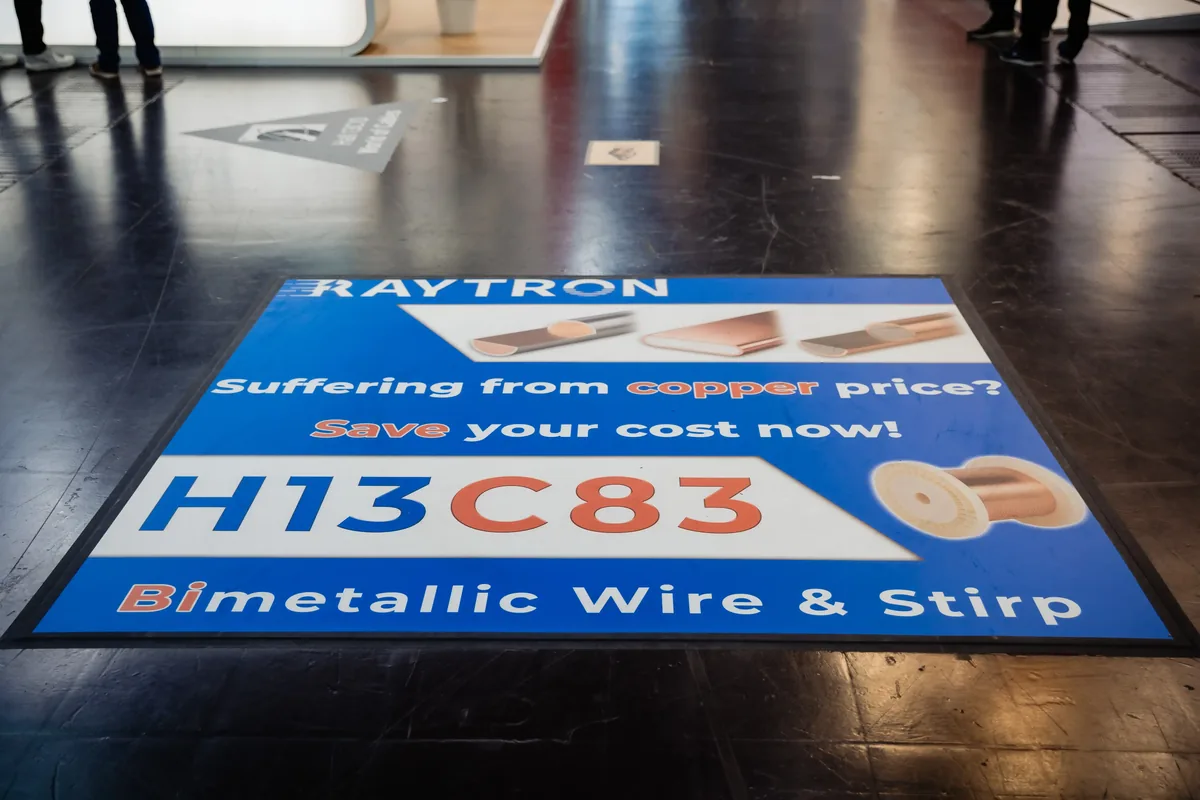
April 13-17, 2026 · Düsseldorf Exhibition Centre, Düsseldorf, Germany · H13C83
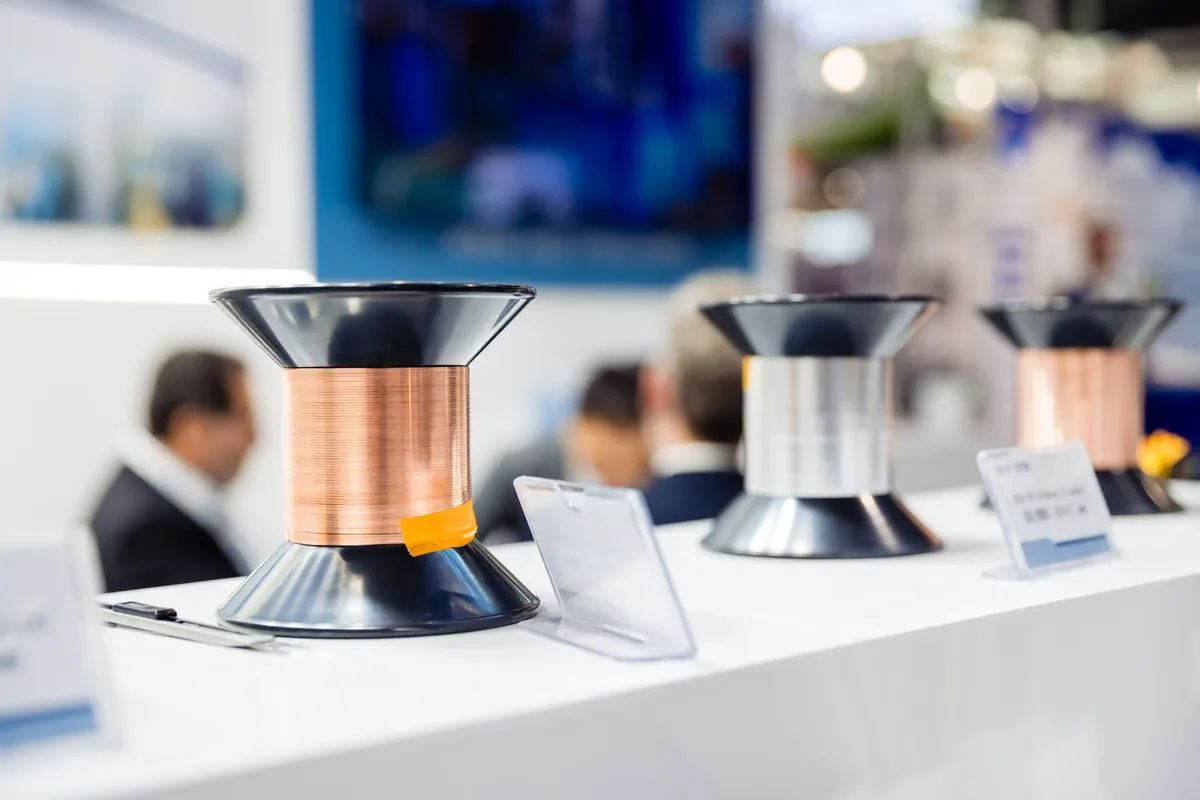
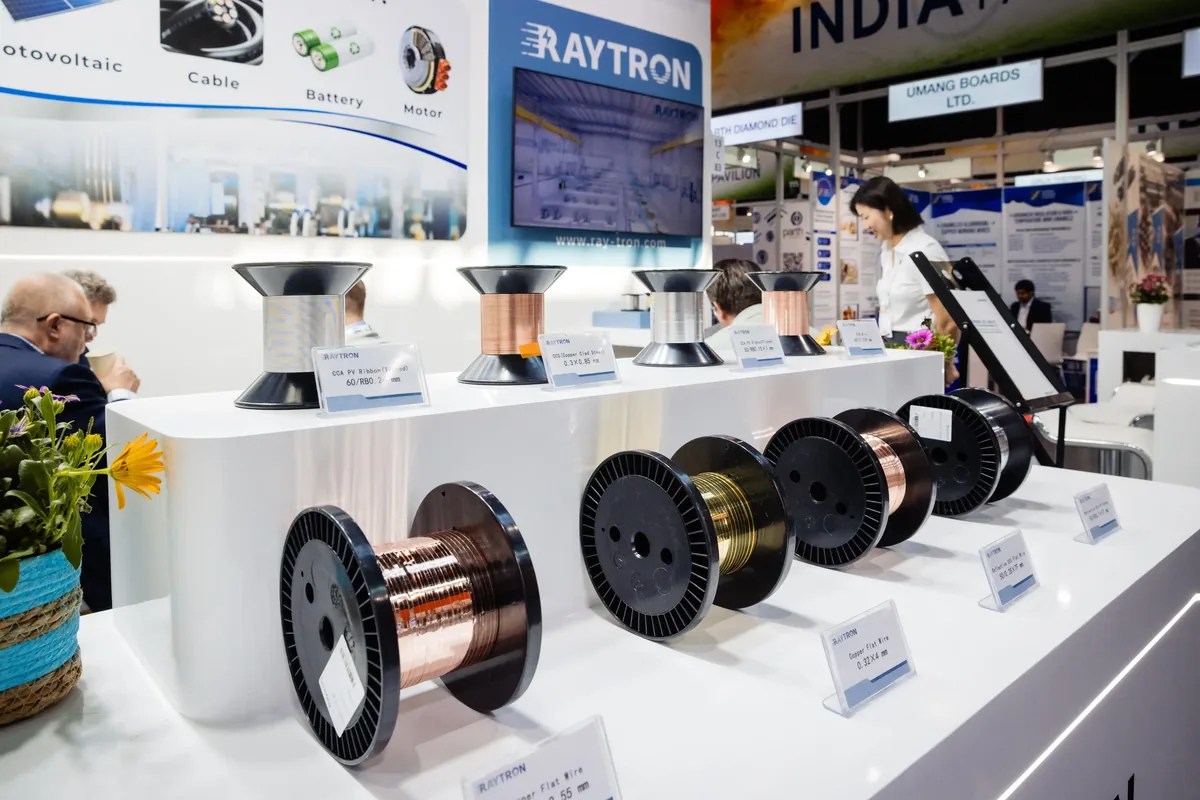
Raytron presented clad conductor structures in round wire, flat wire, strip and foil. Follow-up reviews define the electrical duty, dimensions, joining and test plan for each application.
Date
April 13-17, 2026
Venue
Düsseldorf Exhibition Centre, Düsseldorf, Germany
Booth
H13C83
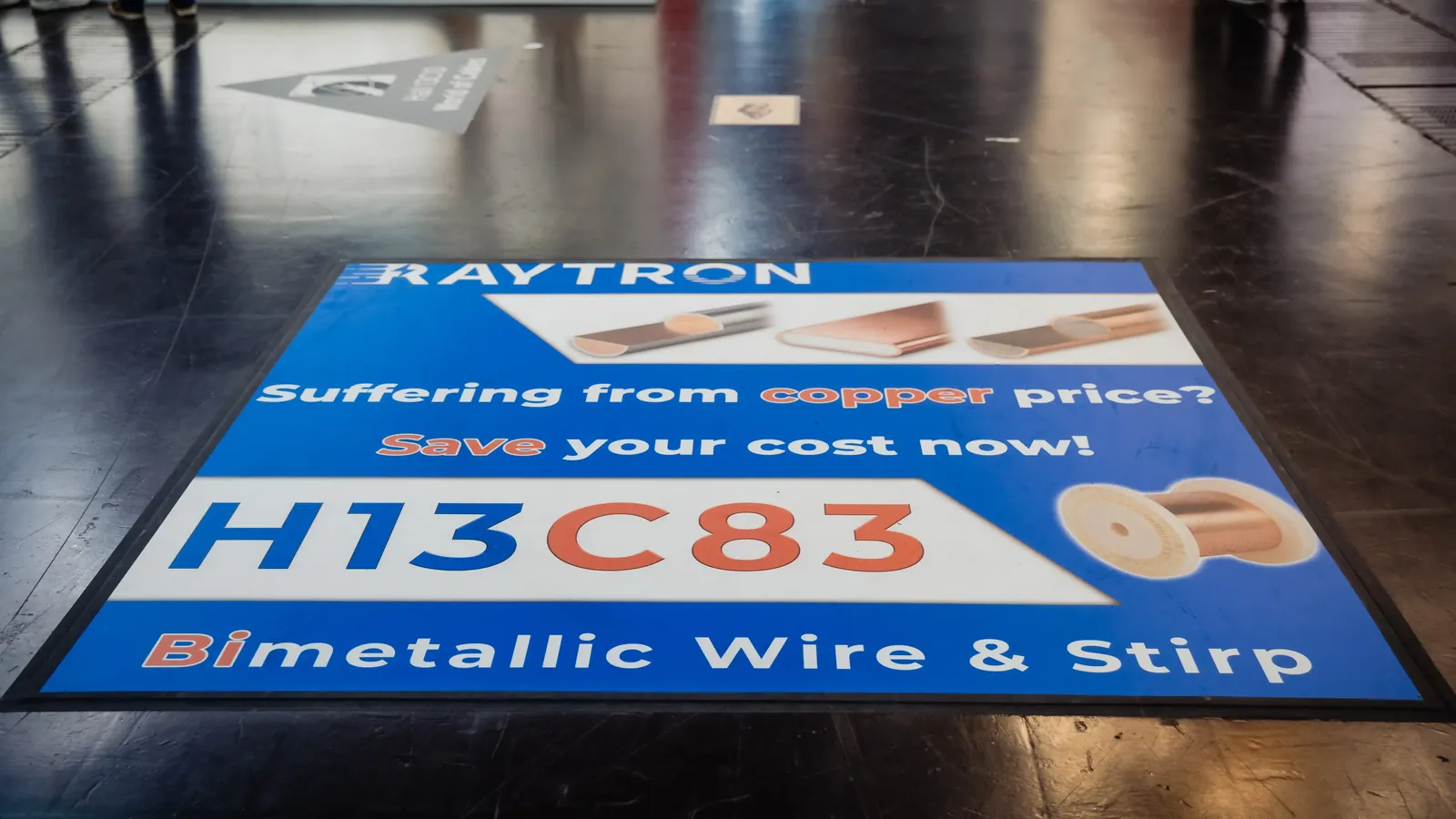
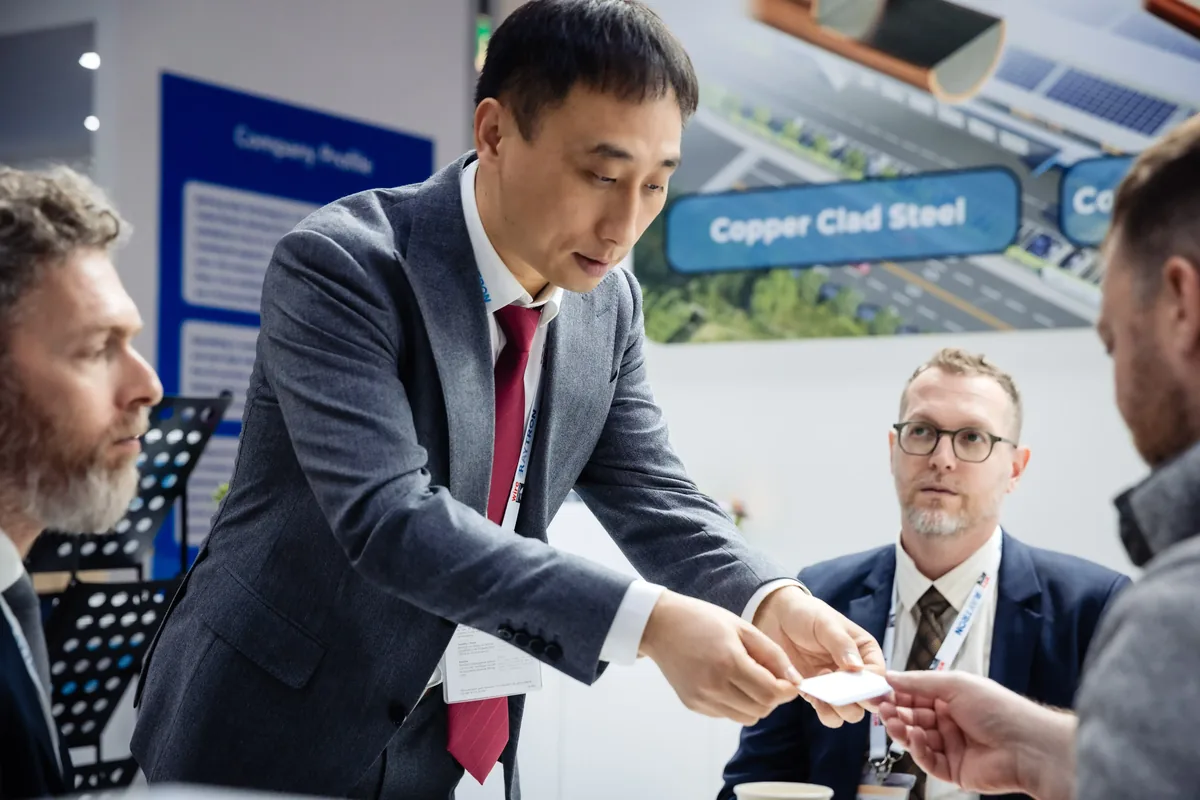
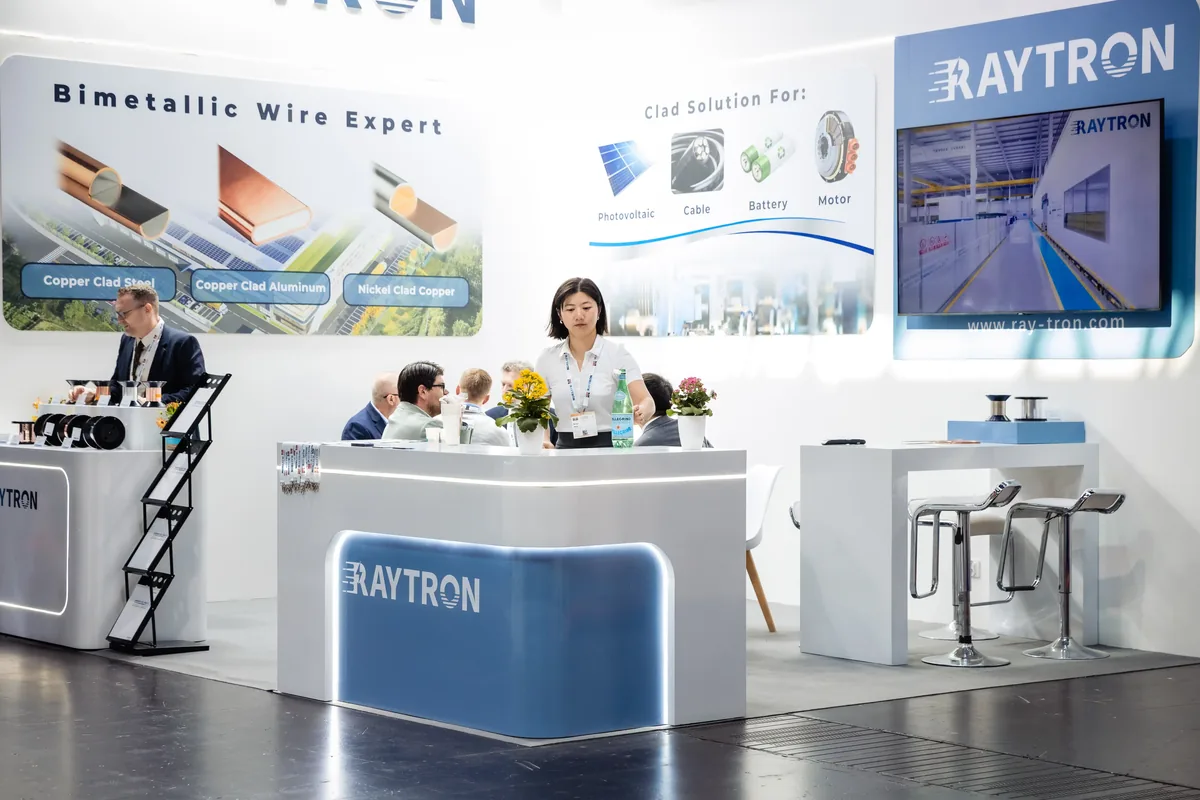
Raytron New Energy (Zhejiang) Co., Ltd. exhibited at wire 2026 from April 13 to 17 at the Düsseldorf Exhibition Centre, Booth H13C83. Discussions covered conductor structures for lower weight, reduced copper use, strength, temperature capability, termination and long-term reliability. Each proposal requires calculation, samples and validation.
Clad Conductor Platforms Presented
Copper-Clad Aluminum Round Wire, Flat Wire and Strip
For cable, automotive and electronic interconnections, communications, coils and other lightweight conductor designs. Key review items include continuous copper coverage, bond-interface stability, dimensional capability, electrical-mechanical balance and compatibility with soldering, crimping, tinning and insulation processes.
Copper-Clad Steel
For grounding, tracer wire, coaxial and communication conductors, signal applications and designs requiring higher strength with a functional copper surface. Core grade, copper ratio, bending, tensile behavior and corrosion exposure must be defined.
Nickel-Clad Copper
For high-temperature electronic interconnections, battery connections and environment-resistant designs, with emphasis on nickel-layer continuity, forming, joining and service temperature.
Custom Clad Materials
For projects requiring a specific balance of conductivity, joining, strength, temperature resistance or precious-metal efficiency, subject to a defined specification and validation method.
Six Engineering Topics Repeated Across Booth Discussions
- How copper volume ratio and copper weight ratio are defined and converted;
- How conductor size and economics change under equal-cross-section, equal-resistance and equal-weight comparisons;
- How drawing, rolling, annealing, slitting, hot-dip tinning, insulation, welding and crimping affect the clad interface;
- How to control concentricity, cladding uniformity, flatness, camber, burr, surface condition and lot consistency;
- How to plan temperature-rise, bending, vibration, corrosion and long-term reliability tests;
- What drawings, inspection records and change controls are needed from sampling through pilot production and qualification.
Information for follow-up
- Product form, dimensions, tolerances, cut length or coil requirements;
- Current material and specification, plus the cost, weight or performance objective;
- Target resistance, conductivity, current, voltage drop or temperature-rise limit;
- Strength, elongation, bending, fatigue, temperature and environmental requirements;
- Drawing, rolling, tinning, insulation, welding, crimping, stamping or other downstream processes;
- Sample quantity, validation timing, estimated annual demand and certification requirements.
Booth and Exhibits
Frequently asked questions
Can Raytron customize the copper ratio?
Can CCA replace copper at the same dimensions?
Can Raytron provide samples first?
How can I receive the exhibition materials?
Submit a Specification to Start the Review
Share your basics and current specification highlights. Raytron engineering will run an initial application, electrical, thermal, mechanical, processing, joining and environmental review.
Related Products and Technology
Related Events
Final performance and delivery are subject to mutually confirmed drawings, technical agreements, test methods and lot inspection data.