
13
Precision Rolling Lines
Rolling, slitting and dimensional control
Our metallurgical bonding technology ensures a stable interface between different metals, verified by cross-section inspection.
Validation Capability
Raytron connects material selection, process control and inspection items to procurement specifications so engineering, quality and sourcing teams can align before RFQ.
| Stage | Key Checks | Evidence Buyers Should Request |
|---|---|---|
| Interface structure |
|
|
| Mechanical reliability |
|
|
| Application boundary |
|
|
Test Methods & Applicability
The following test items can be provided per product form, purchase specification and customer agreement. Unpublished data is available upon NDA / request.
| Property | Metallurgical Bond | Electroplated |
|---|---|---|
| Bond Strength | Verified by peel/shear test | Lower; surface-dependent |
| Interface Continuity | Continuous | Often discontinuous |
| Thermal Stability | Excellent | Poor - delaminates |
| Corrosion Resistance | Excellent | Moderate |
Unlike traditional processes that rely on surface roughness for mechanical interlocking, Raytron's metallurgical bond technology promotes the inter-diffusion of copper and aluminum atoms across the interface barrier by strictly controlling thermodynamic parameters during annealing. This diffusion creates a solid-solution transition layer with a composition gradient, effectively erasing the physical boundary.
Result: Reliable performance in the most demanding applications
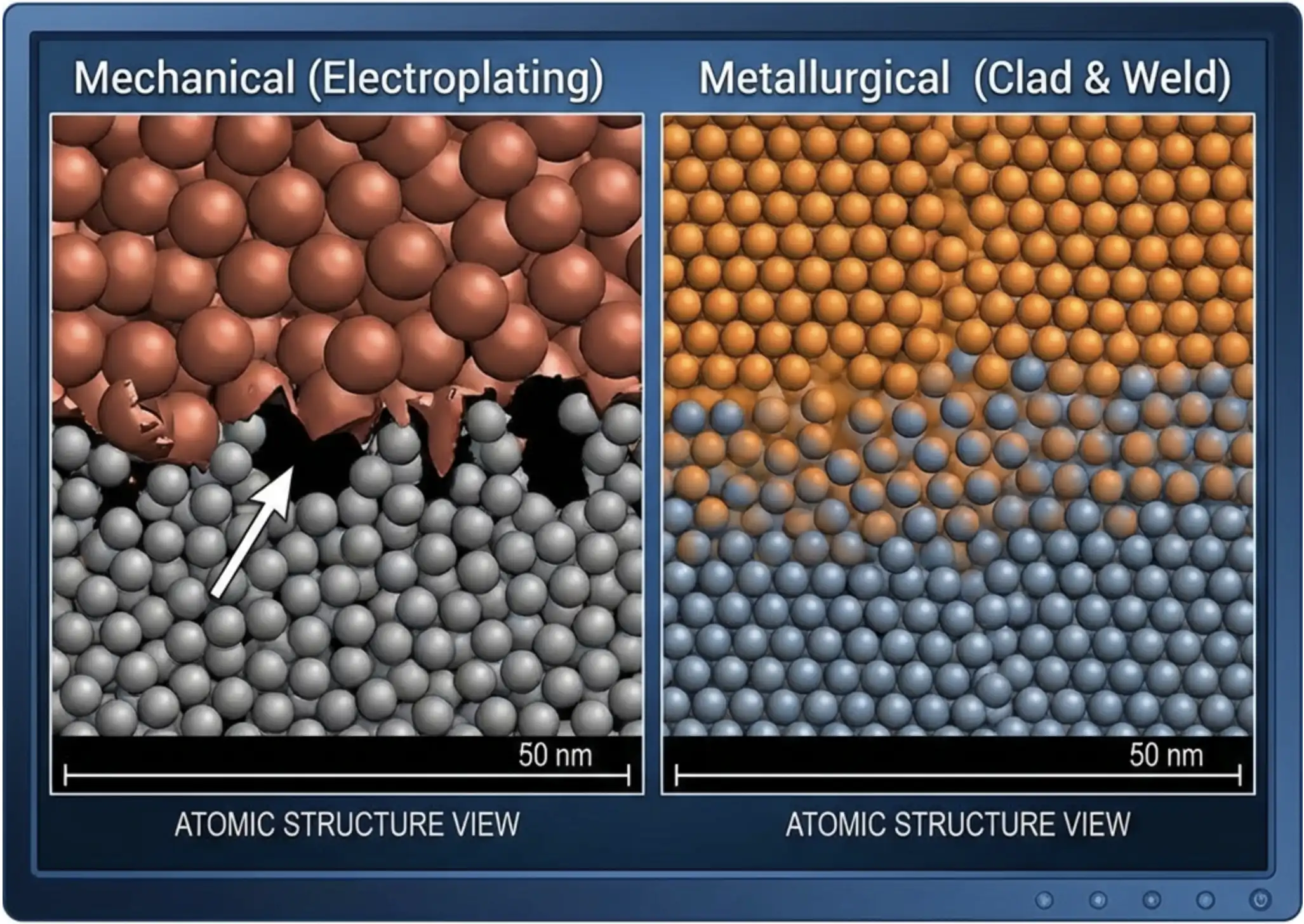
Simulated interface structure under high magnification
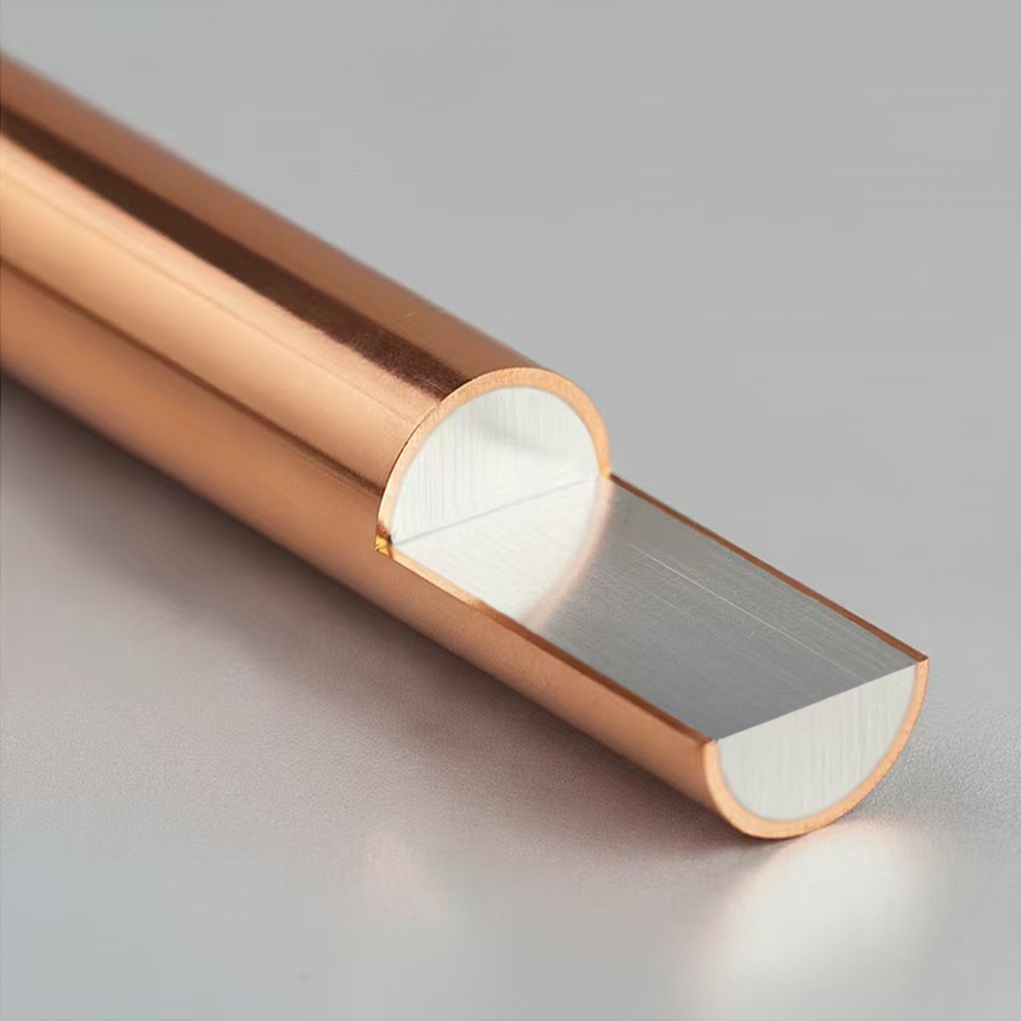
Copper Clad Aluminum (Cu/Al)
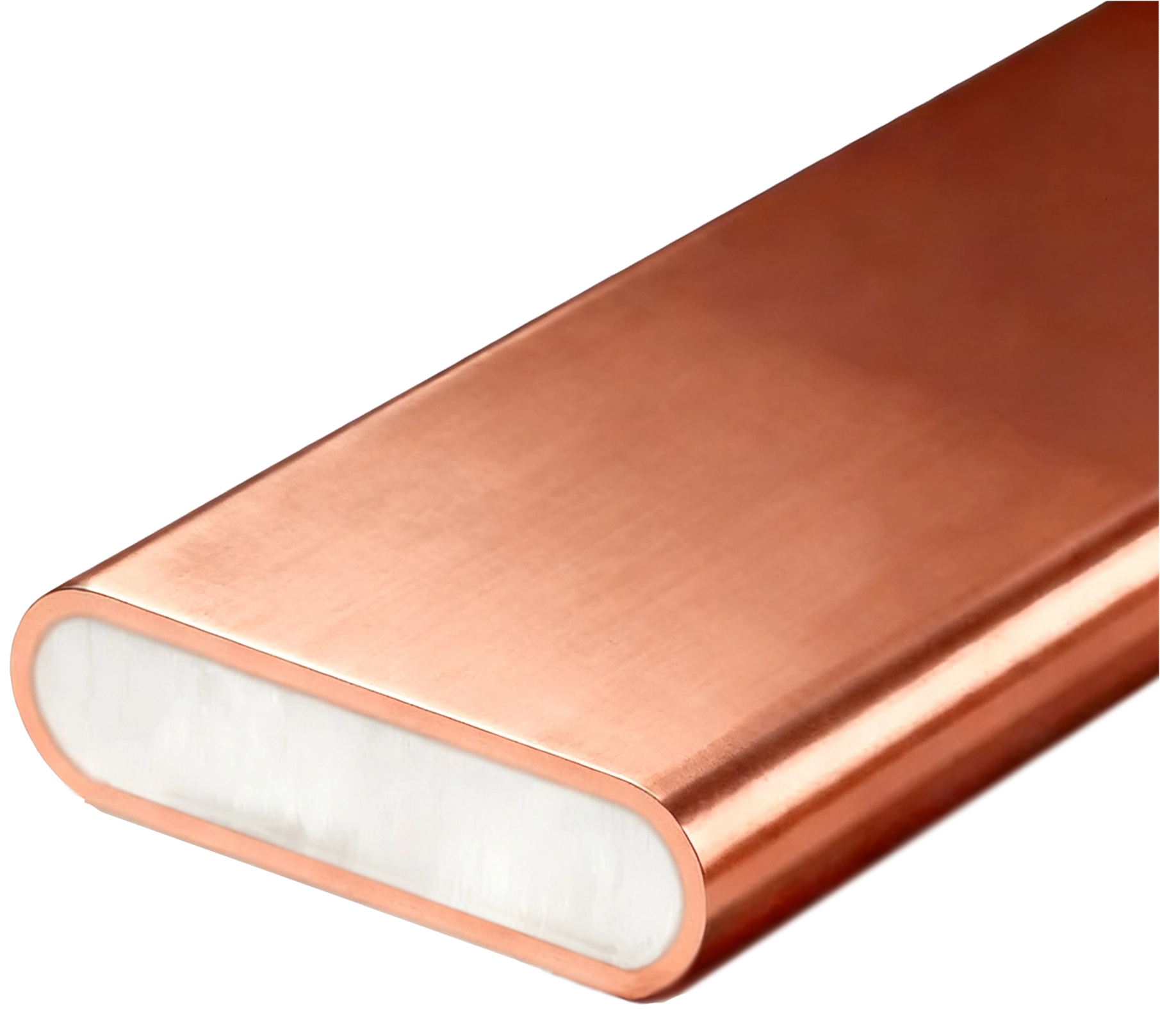
Copper Clad Aluminum (Cu/Al)
Copper Clad Aluminum (Cu/Al)
Raytron focuses on copper-aluminum composite PV ribbon and busbar ribbon, plus CCA, CCS and NCC clad conductors with custom specifications, sample support and production quotations.
Rolling, slitting and dimensional control
Supports samples, pilot lots and ongoing supply
Clad conductor, rolling and related processes
Suitable for engineering samples and trial orders
Initial acknowledgement within 24 business hours.
Quality system and lot traceability support