
Quality Control: Ensuring Bimetallic Conductor Reliability
1. 引言
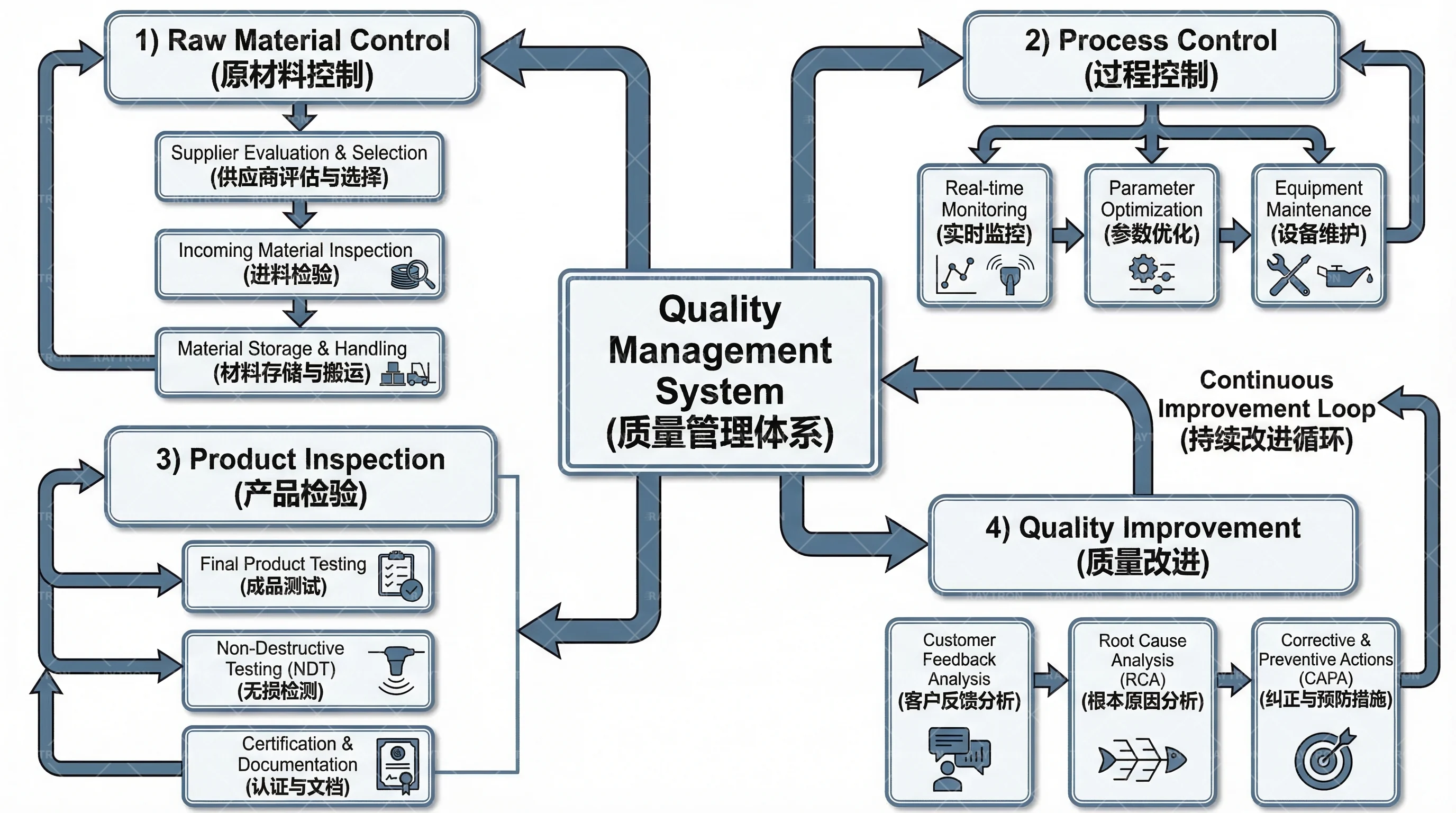
2. 质量体系
3. 检测方法
4. 统计过程控制
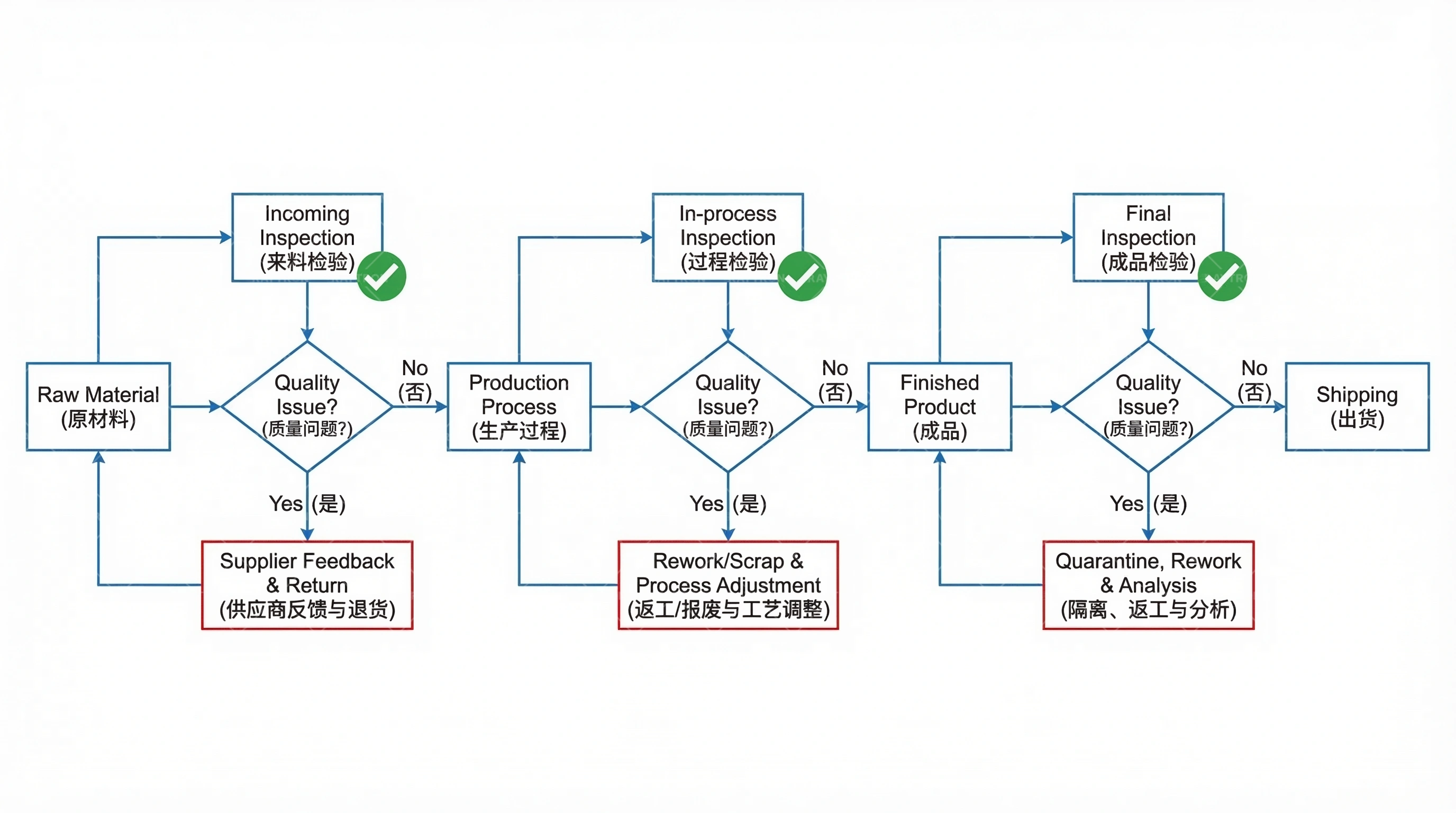
5. 结论
Frequently Asked Questions
What are the main quality defects of bimetallic conductors?
Main defects include: interface delamination (poor bonding), cladding eccentricity (uneven thickness), surface cracking (excessive work hardening), dimensional out-of-tolerance (die wear), insufficient conductivity (raw material issues). These defects can be avoided through strict process control and inspection.
How to establish an effective quality control system?
Establishing quality control system requires: 1) Define quality standards and testing methods; 2) Establish raw material inspection procedures; 3) Implement process monitoring and SPC; 4) Establish finished product inspection specifications; 5) Establish traceability and corrective action systems; 6) Continuous training and improvement.
How is SPC applied in bimetallic conductor production?
SPC is applied to monitor key parameters: conductivity, tensile strength, dimensions, etc. Use X-bar R charts to monitor process mean and variation, set control limits and specification limits. When data points exceed control limits, analyze causes and take corrective actions.
Figures
创建质量控制流程图
创建SPC控制图示例
创建缺陷类型统计图
Tables
| 指标 | 规格 | 检测频率 |
|---|---|---|
| Conductivity | ≥62% IACS | 每卷 |
| Tensile Strength | ≥150 MPa | 每批 |
| 延伸率 | ≥15% | 每批 |
| 检测项目 | 方法 | standards |
|---|---|---|
| Conductivity | 涡流法 | ASTM B193 |
| 尺寸 | 千分尺 | ASTM B258 |
| 结合强度 | 剥离测试 | ASTM B452 |
References
- ASTM Standards for Bimetallic Conductors ASTM (2020)