
NCC vs Pure Nickel: High-Temperature Applications
1. Introduction
2. Material Overview
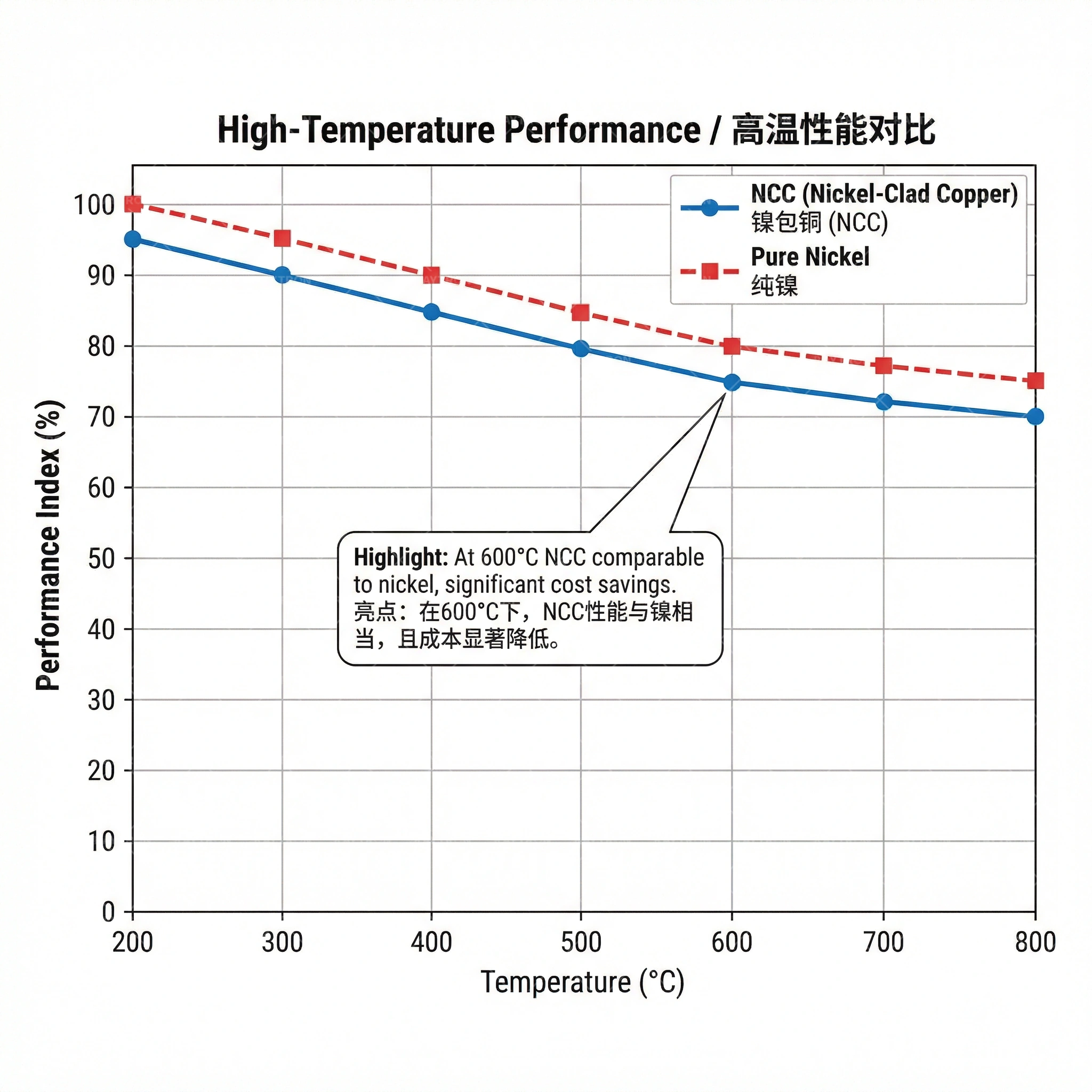
3. High-Temperature Performance
4. Oxidation Resistance
5. Mechanical Properties
6. Electrical Properties
NCC conductivity is far higher than pure nickel, advantageous in high-current applications.
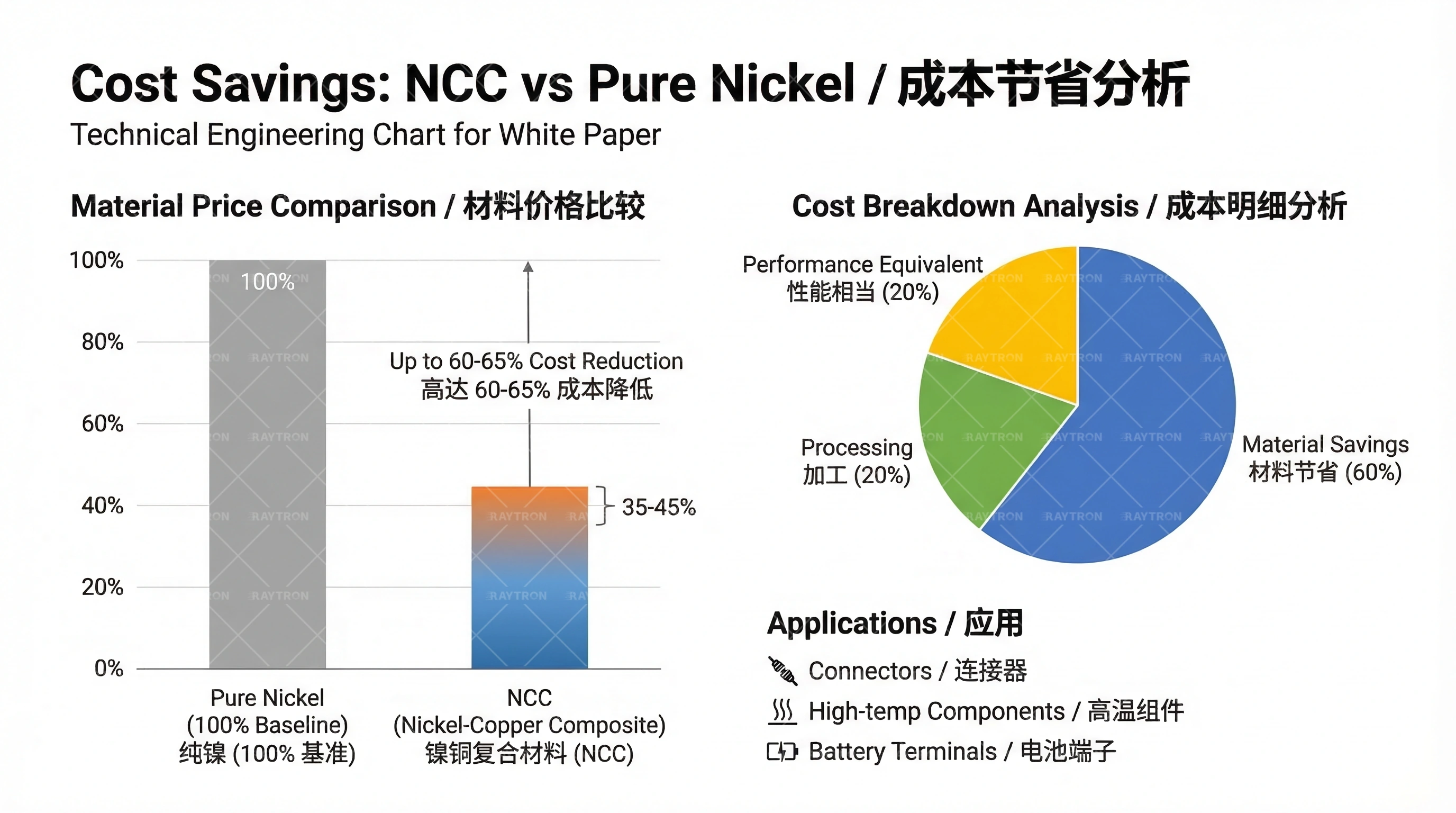
7. Cost Analysis
NCC provides cost savings while maintaining performance.
8. Conclusion
NCC is an excellent alternative to pure nickel for applications under 400°C, offering higher conductivity and lower cost.
Frequently Asked Questions
What is Nickel-Clad Copper (NCC)?
NCC is a bimetallic conductor with a copper core and nickel outer layer, manufactured through cladding processes. It combines the high conductivity of copper with the oxidation resistance and high-temperature capability of nickel.
What are the temperature limitations of NCC compared to pure nickel?
NCC is suitable for continuous operation up to 400-450°C and intermittent use up to 500°C. Pure nickel can operate continuously at 600°C and intermittantly at 800°C. For applications above 450°C, pure nickel should be considered.
Why choose NCC over pure nickel for high-temperature applications?
NCC offers significantly higher conductivity (85% IACS vs 23% IACS), lower cost (20-30% savings), and is suitable for most high-temperature applications under 400°C. The higher conductivity allows for smaller conductor sizes in current-carrying applications.
Is NCC suitable for automotive under-hood applications?
Yes, NCC is excellent for automotive under-hood applications where temperatures typically range from 150-300°C. Its combination of high conductivity, oxidation resistance, and cost-effectiveness makes it ideal for engine compartment wiring and sensors.
How does NCC perform in terms of solderability?
NCC has good solderability due to its nickel surface, though not as easy as pure copper. The nickel cladding prevents oxidation of the underlying copper, maintaining surface quality for reliable connections over time.
Figures
创建高温Compare Performance图
创建氧化层特性对比图
Tables
| Rating | Temperature Range | Typical Application |
|---|---|---|
| High-temp | 150-300°C | Automotive under-hood |
| Very high-temp | 300-500°C | Aerospace |
| Ultra high-temp | 500-800°C | Industrial furnaces |
| Property | NCC | Pure Nickel |
|---|---|---|
| Max continuous temp | 400-450°C | 600°C |
| Max intermittent temp | 500°C | 800°C |
| 400°C conductivity retention | 53% | 65% |
| Material | Room Temp | 400°C |
|---|---|---|
| NCC-85% | 85% IACS | 45% IACS |
| Pure Nickel | 23% IACS | 15% IACS |
| Material | Relative Cost Index |
|---|---|
| NCC-10% | 0.80 |
| NCC-20% | 1.00 |
| Pure Nickel | 1.30 |
References
- ASTM B355: Nickel-Coated Copper Wire ASTM (2020)
- Nickel and Nickel Alloys ASM (2020)