
Heat Treatment: Optimizing Bimetallic Properties
1. Introduction
Heat TreatmentControlConductorMechanical properties and conductivity KeyProcess。
2. Annealing Process
3.
4. Aging Treatment
5. Interface Evolution
6. Conclusion
Frequently Asked Questions
How to determine annealing temperature for bimetallic conductors?
Annealing temperature needs to consider recrystallization temperatures of both metals. CCA annealing temperature should be above aluminum's recrystallization temperature (150-250°C) but below copper's (200-300°C), typically 250-350°C. Excessive temperature leads to excessive IMC growth.
How does heat treatment affect conductivity?
Annealing can eliminate lattice defects and improve conductivity. Conductivity is lower in work-hardened condition and can recover to near theoretical values after annealing. However, excessive IMC growth increases interface resistance and reduces overall conductivity.
How to choose heat treatment type?
Full annealing: choose when maximum ductility and softness are needed; Partial annealing: choose when balance of moderate strength and ductility is needed; Stress relief annealing: choose when maintaining strength while reducing internal stress is needed. Determine based on application requirements.
Figures
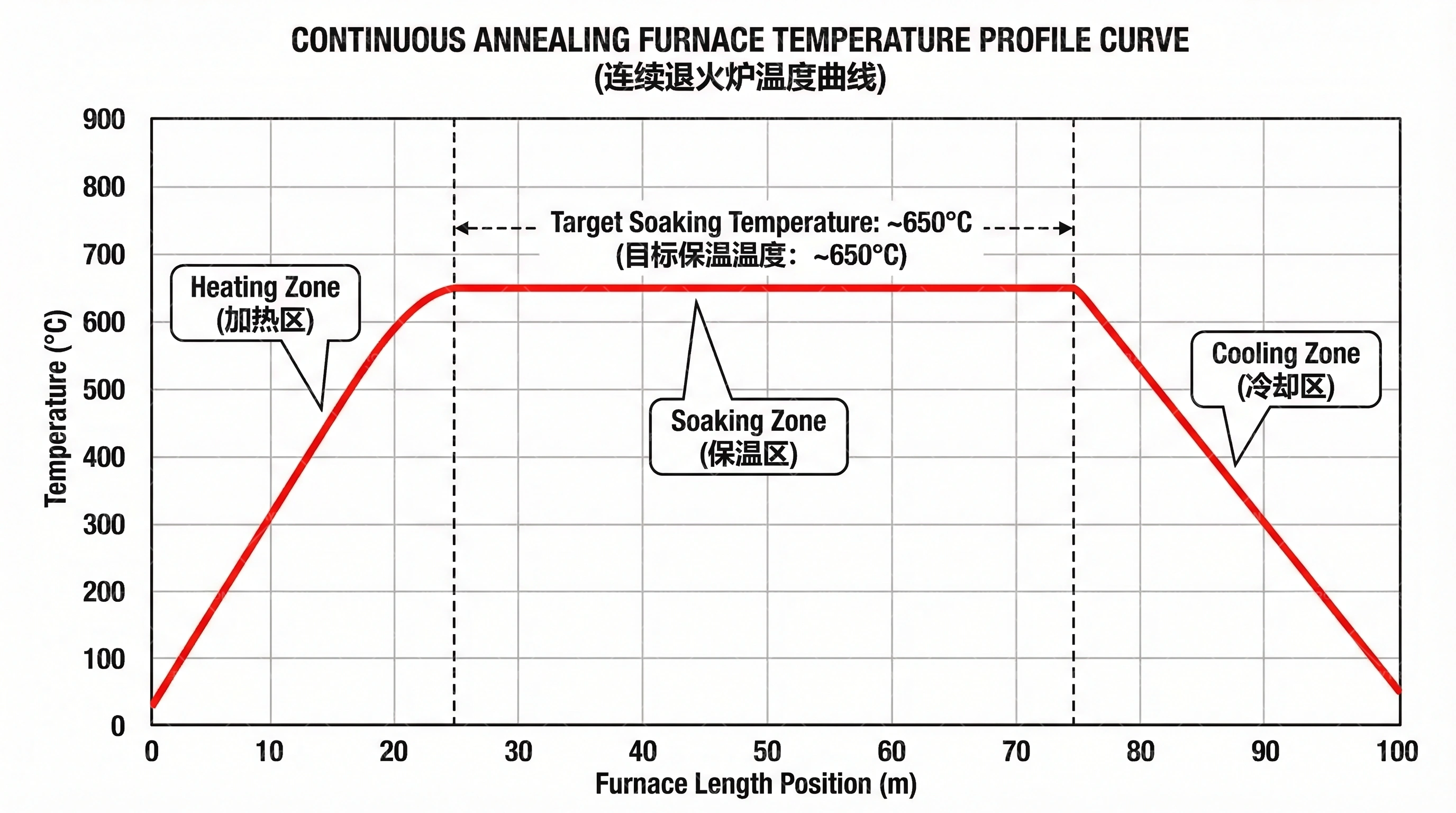
Create Annealing Temperature on Property Impact Curve
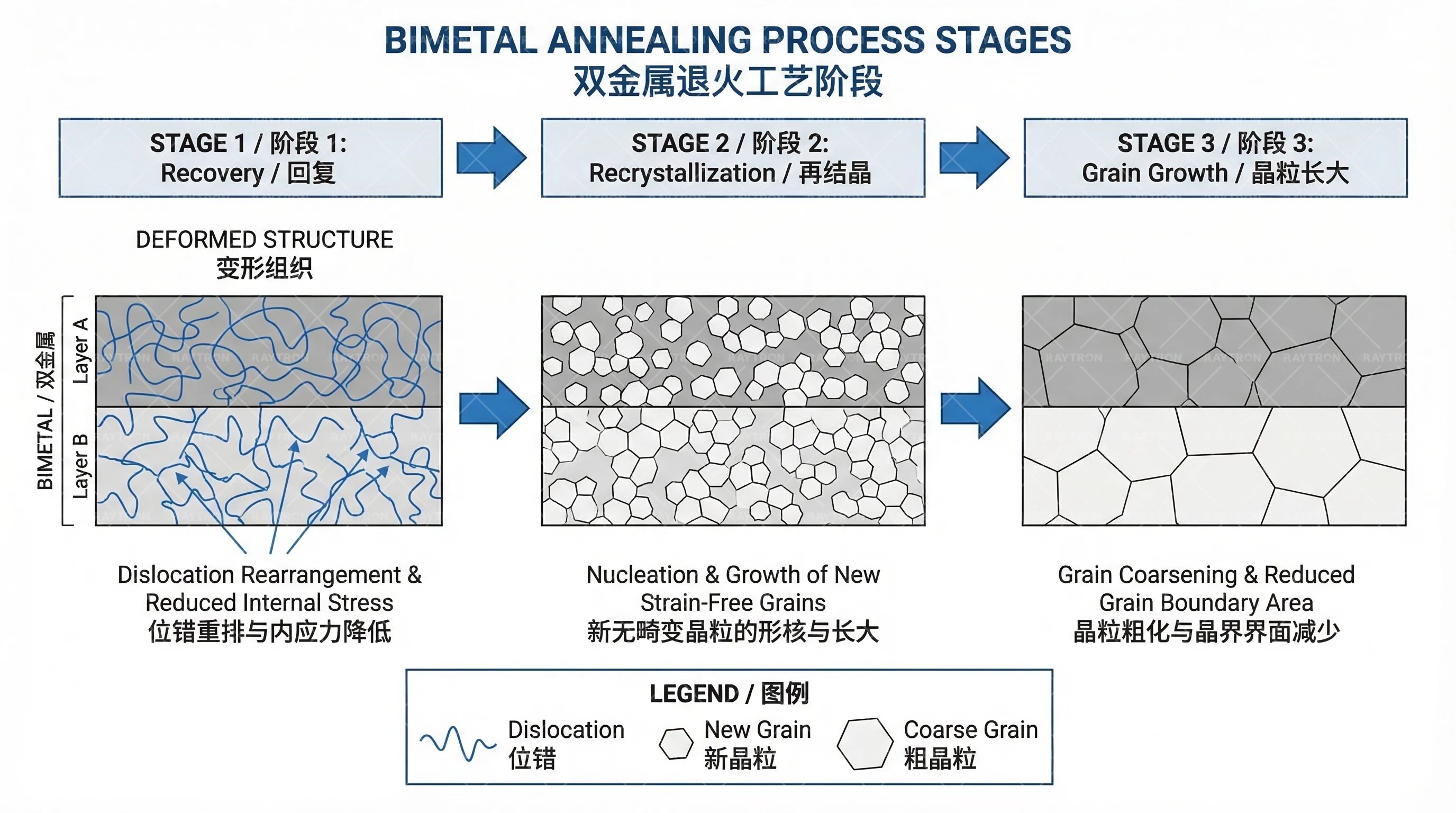
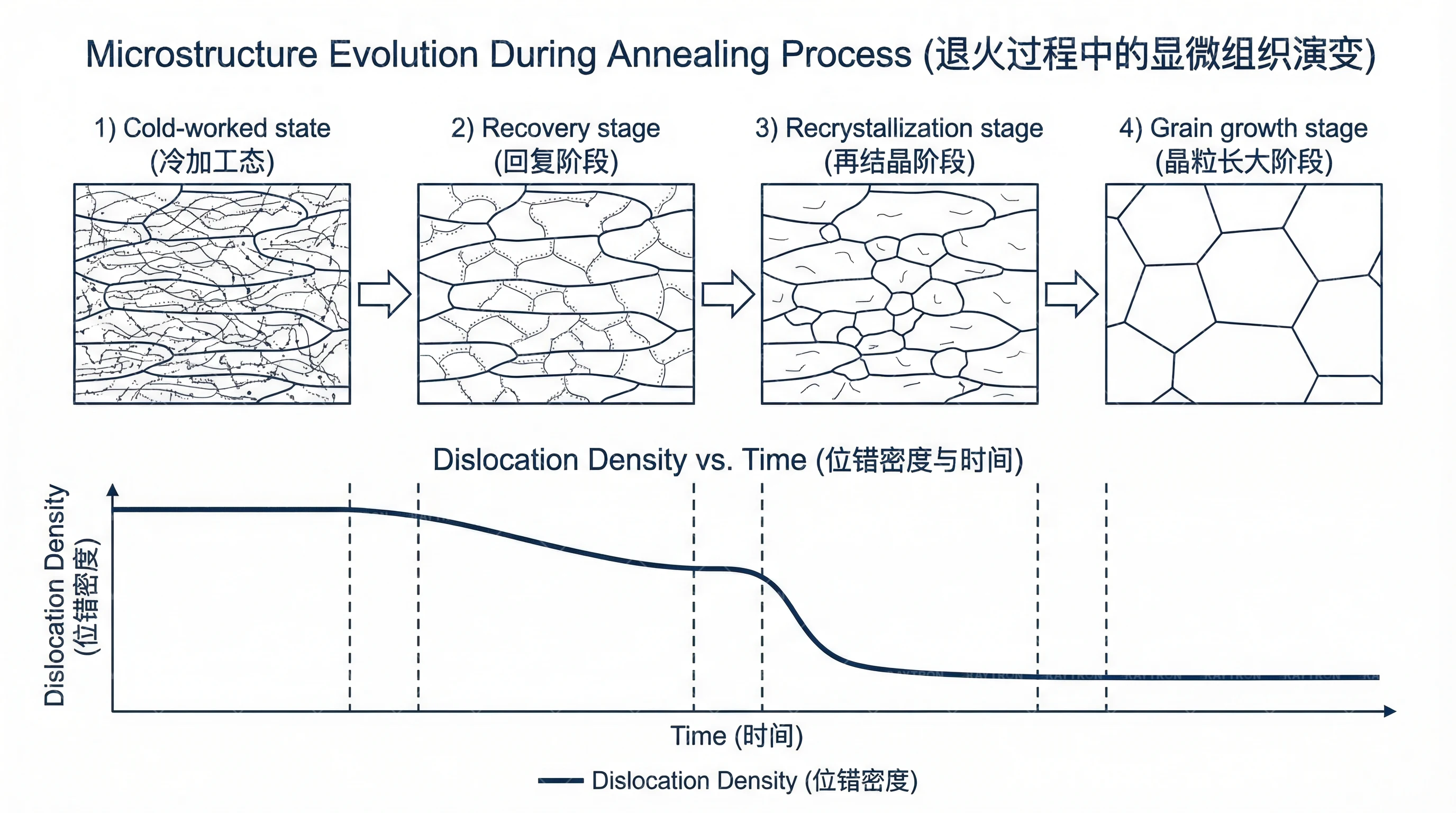
Re-Crystallization ProcessDiagram
Interface EvolutionSEMPhoto
Tables
| Material | Temperature (°C) | Time (min) | Atmosphere |
|---|---|---|---|
| CCA | 250-350 | 30-60 | N₂ |
| CCS | 400-500 | 30-60 | N₂ |
| NCC | 350-450 | 30-60 | N₂ |
| Target | Treatment Type | ApplicableMaterial |
|---|---|---|
| Softening | Full Annealing | CCA, CCS |
| Strong | AgingTreatment | CCAA |
| Stress | LowTemperature Annealing | All |
References
- Heat Treating Handbook ASM (2020)