
CCS vs Brass: Strength-Conductivity Trade-offs
1. Introduction
CCS and brass are both used when pure copper cannot provide sufficient mechanical strength.
2. Material Overview
3. Mechanical Properties
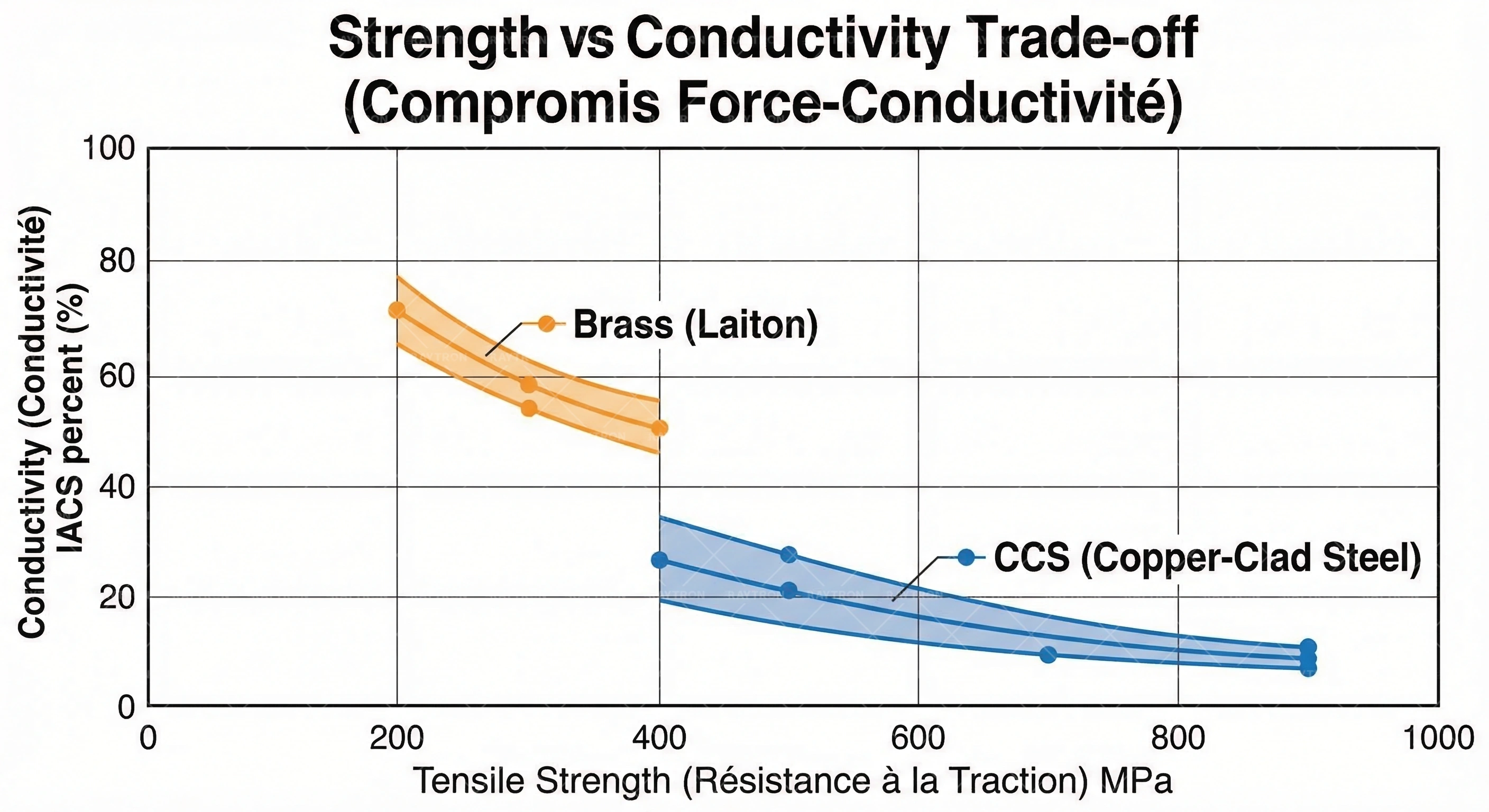
CCS provides significantly higher strength.
4. Electrical Properties
5. Corrosion Resistance
Brass is susceptible to dezincification and stress corrosion cracking.
6. Cost Analysis
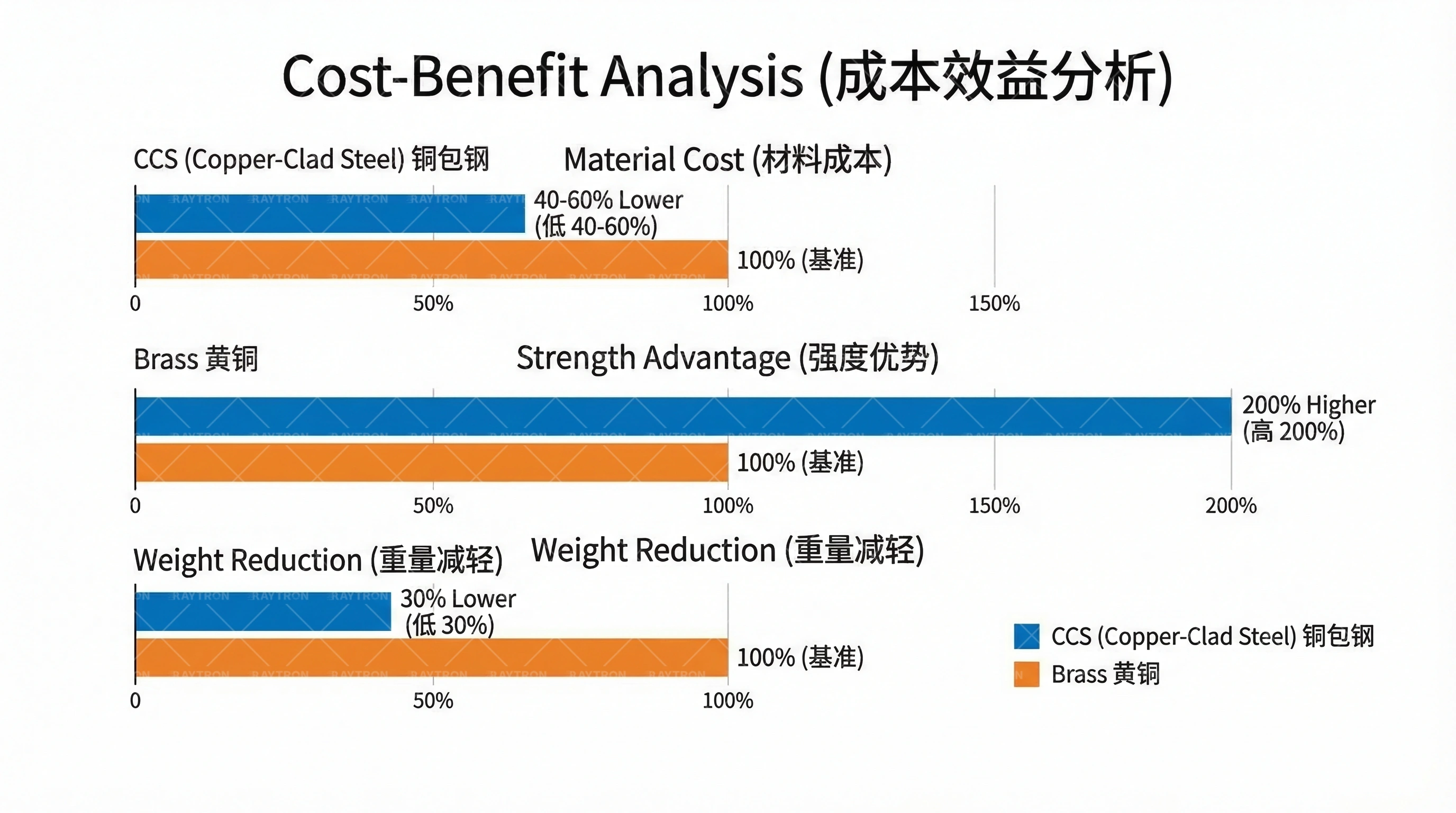
CCS provides significant cost advantages.
7. Application Selection
8. Conclusion
CCS excels in applications requiring high strength and low cost; brass is more suitable for applications requiring good workability and moderate conductivity.
Frequently Asked Questions
What is Copper-Clad Steel (CCS)?
CCS is a bimetallic material consisting of a steel core with a copper outer layer, manufactured through cladding processes. It combines the high strength of steel with the conductivity and corrosion resistance of copper.
When should I choose CCS over brass?
Choose CCS when high mechanical strength is critical, such as in springs, connectors requiring high insertion force, or applications subject to mechanical stress. CCS is also preferred when stress corrosion cracking is a concern, or when cost optimization is important.
What are the limitations of CCS compared to brass?
CCS has lower conductivity (21-23% IACS vs brass's 28% IACS), limited formability due to the steel core, and is not suitable for applications requiring extensive machining or forming operations where brass excels.
Is CCS suitable for marine environments?
CCS has moderate corrosion resistance in marine environments. While the copper cladding provides protection, brass generally offers better overall corrosion resistance in marine applications. Proper coating or protection may be needed for CCS in harsh marine conditions.
Why is CCS less susceptible to stress corrosion cracking than brass?
Brass, particularly high-zinc brasses, is susceptible to stress corrosion cracking (SCC) due to dezincification. CCS, with its steel core and copper cladding, does not have this zinc-related vulnerability, making it more reliable in stress corrosion-prone environments.
Figures
CCS vs YellowCopperCompare Performance Diagram
Create Stress CorrosionSensitivityComparison Diagram
Tables
| Property | CCS-21% | Brass C260 |
|---|---|---|
| Tensile Strength (MPa) | 600-800 | 300-450 |
| Yield Strength (MPa) | 500-700 | 100-200 |
| Elongation (%) | 1-5 | 30-50 |
| Property | CCS-21% | Brass |
|---|---|---|
| Conductivity (% IACS) | 21-23 | 28 |
| Temp Coefficient (/°C) | 0.0038 | 0.0018 |
| Environment | CCS | Brass |
|---|---|---|
| Atmospheric | Good | Good |
| Marine | Fair | Good |
| Stress Corrosion | Low | Medium-High |
| Material | Relative Cost Index |
|---|---|
| CCS-21% | 0.30 |
| CCS-30% | 0.35 |
| Brass | 0.70 |
References
- ASTM B452: Copper-Clad Steel Wire ASTM (2020)
- Copper and Copper Alloys ASM (2001)