
CCA vs Aluminum: Conductivity Enhancement Solution
1. Introduction
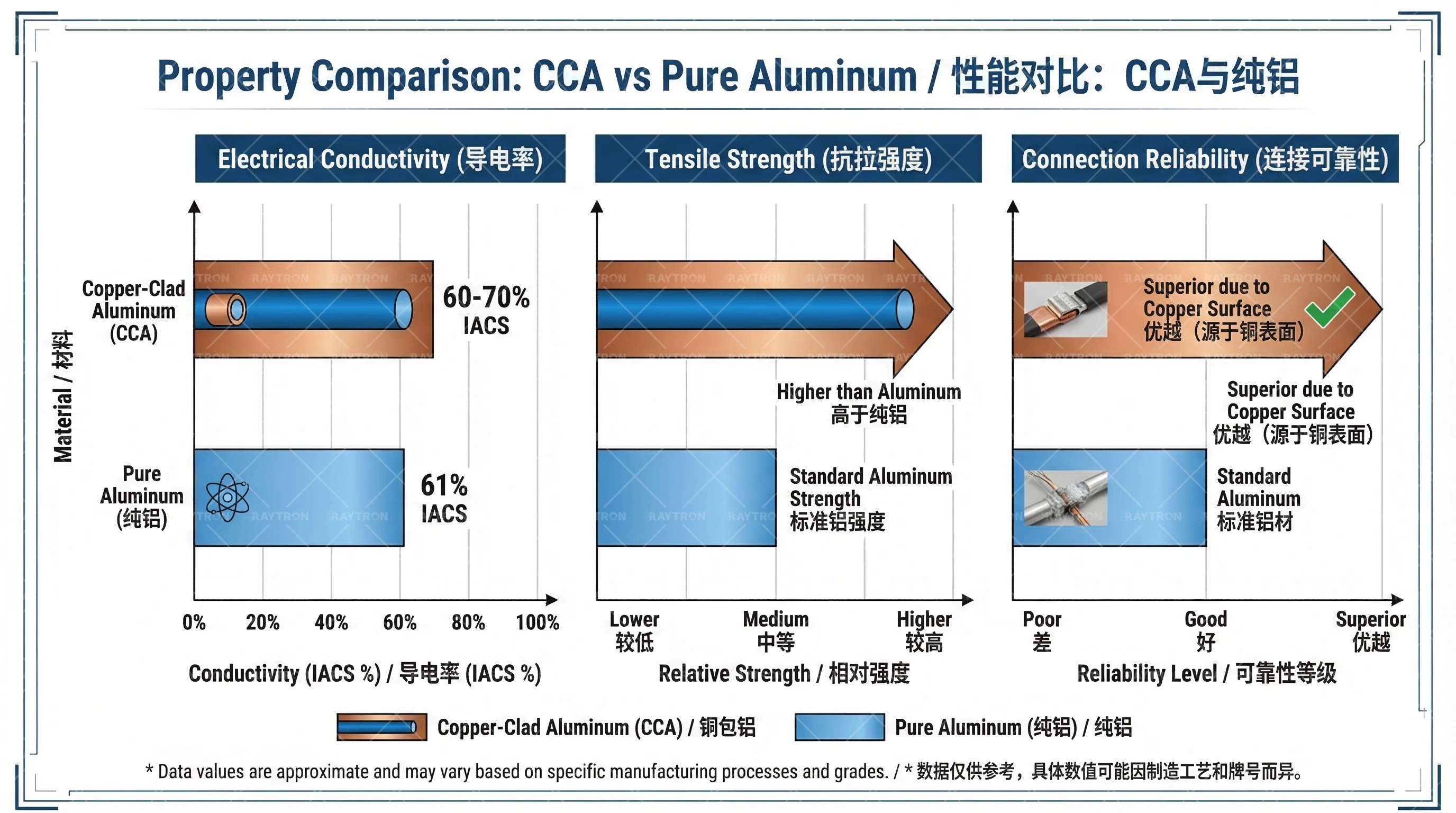
2. Electrical Performance
3. ConnectionPerformance
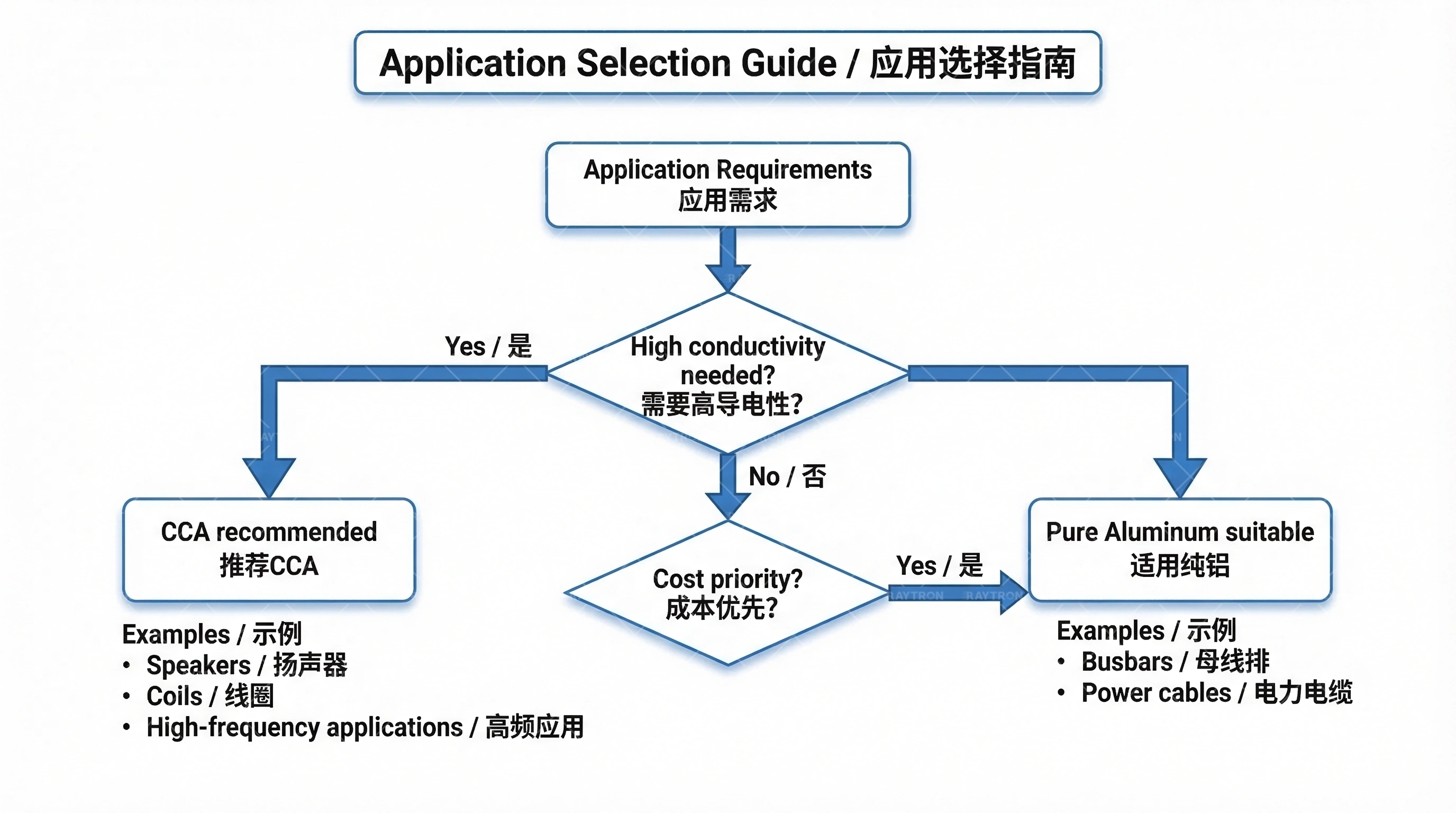
4. ApplicationsSelection
5. Conclusion
Frequently Asked Questions
How does CCA compare to pure aluminum in terms of conductivity?
CCA with 15% copper cladding achieves 62-68% IACS conductivity, which is comparable to or slightly better than pure aluminum's 61% IACS. However, CCA offers additional benefits in connection reliability and oxidation resistance.
What are the main advantages of CCA over pure aluminum?
The primary advantages are: (1) Better connection reliability due to copper surface, (2) Elimination of aluminum oxide issues, (3) Compatibility with standard copper connectors, (4) Superior oxidation resistance, and (5) Better performance in termination applications.
When should I choose pure aluminum over CCA?
Pure aluminum may be preferred for overhead transmission lines where weight and cost are paramount, and specialized aluminum connectors are used. For applications requiring reliable connections and termination, CCA is generally the better choice.
Is CCA more expensive than pure aluminum?
Yes, CCA is more expensive than pure aluminum due to the copper cladding. However, the total installed cost may be lower when considering the elimination of special connectors, reduced maintenance, and improved reliability.
Figures
Create CCA vs PureAluminumCompare Performance Diagram
Create Connection reliabilityComparison Diagram
Tables
| Property | CCA-15% | PureAluminum |
|---|---|---|
| Conductivity (% IACS) | 62-68 | 61 |
| Connection reliability | Excellent | RequiredSpecial Treatment |
| Anti-oxidation Properties | Excellent | Required Protection |
| Application | Recommendation | Reason |
|---|---|---|
| Building Wire | CCA | Connection Reliability |
| Wire | PureAluminum | Cost |
| TransformerWinding | CCA | ConnectionProperty |
References
- ASTM B566: Copper-Clad Aluminum Wire ASTM (2020)