
Engineering application guide
Communication Cable Composite Conductors
Start with the conductor role, signal band and mechanical duty of your cable. Evaluate copper-clad aluminum (CCA) and copper-clad steel (CCS) constructions together with cable geometry and termination requirements.
Discuss the assembly requirementsOn this page
Choose the cable duty before the metal
- 1RF / coaxial signal path
- 2Data / DC paired conductors
- 3Finished cable and terminations
RF attenuation and a paired-data cable’s category and powering requirements are separate qualification routes. Select the appropriate worksheet below.
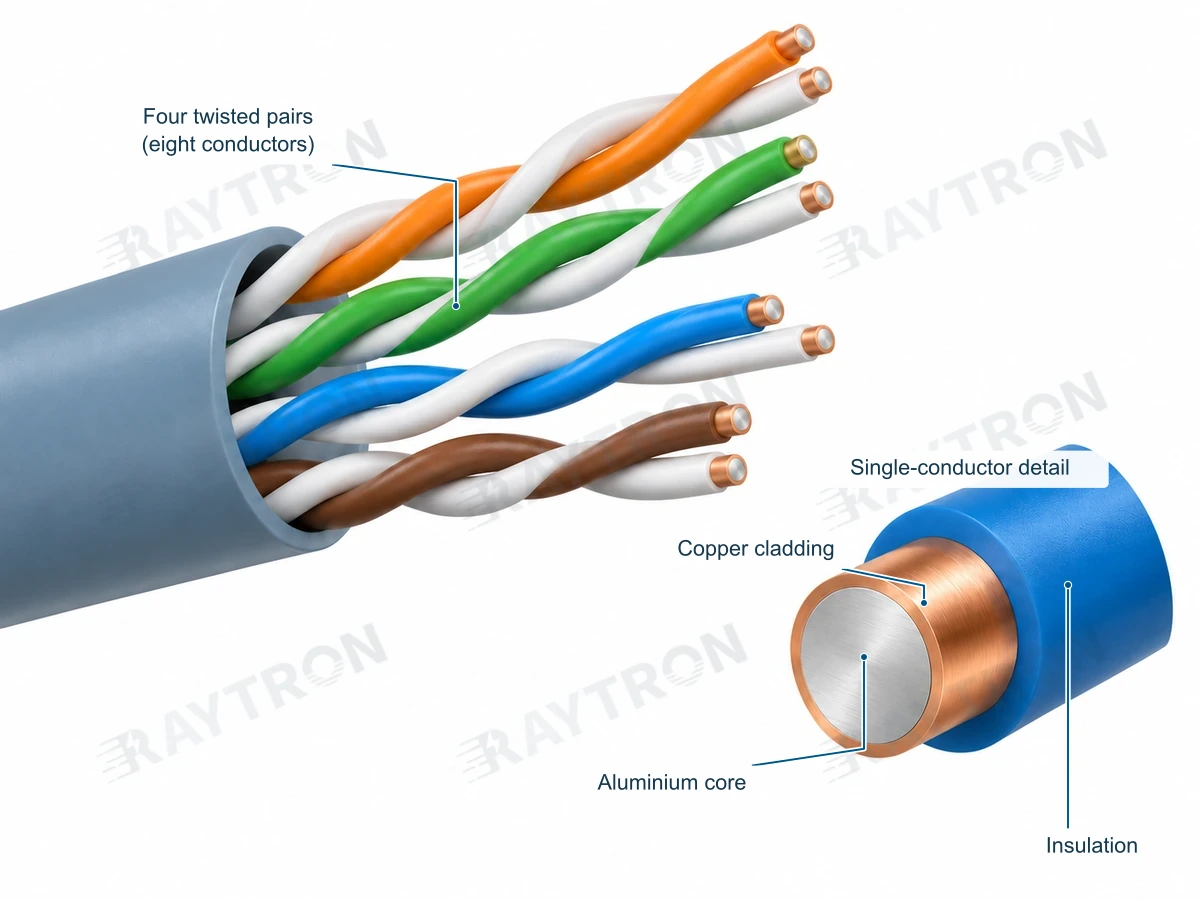
For CAT 5e / CAT 6, identify finished-cable transmission requirements, DC resistance and unbalance, connector construction and any PoE duty. Skin effect is not evidence of category compliance or powering performance.
Related conductor products
Separate the signal path and the power duty
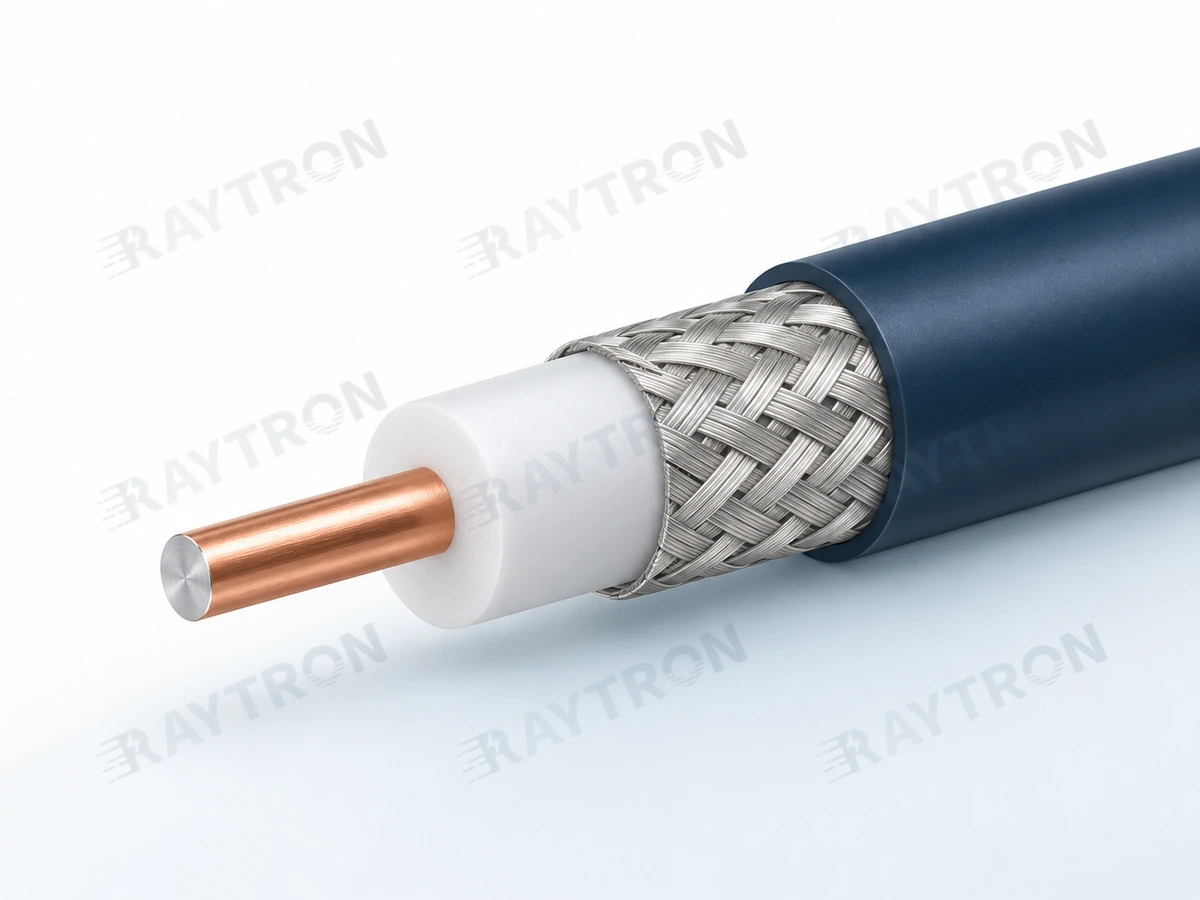
Coaxial / RF centre conductor
Record frequency band, centre-conductor and cable geometry, DC duty, surface/layer requirements, attenuation/return-loss method and connectors. A favourable RF comparison does not establish suitability for twisted-pair or powered data cable.
RF / coaxial conductor record — open worksheet
Record your project requirements and observations, then download or include them in an inquiry.
| Item | Information / units | Your input |
|---|---|---|
| Cable and frequency | Frequency band, cable impedance and centre-conductor / cable dimensions | |
| Conductor construction | Bare wire dimensions, outer-layer thickness or ratio basis, surface and DC duty | |
| Signal acceptance | Attenuation and return-loss methods, frequency points and connector geometry | |
| Sample record | Cable build, sample IDs, method/version, temperature and measured result with units |
Other formats and preview
Save or restore a draft
Drafts stay in this browser. Clear inputs also removes the saved draft.
Worksheet version: RT-RFQ-WORKSHEET-1.
Data cable with DC power
Confirm the target cable standard/category, market and permitted conductor construction first. Where copper is required, changing cross-section or passing a signal test does not authorize CCA. Record DC resistance, power/thermal duty, terminals and the complete-cable qualification route.
Copper round-wire specification referenceData / DC power conductor record — open worksheet
Record your project requirements and observations, then download or include them in an inquiry.
| Item | Information / units | Your input |
|---|---|---|
| Market and standard | Target country/market, cable category or customer specification and revision | |
| Material permission | Required conductor material and the specified qualification route | |
| Geometry and DC duty | Conductor section/strand construction, DC resistance, current and temperature | |
| Joint and test record | Terminal / connector, test method, temperature-rise conditions and sample IDs |
Other formats and preview
Save or restore a draft
Drafts stay in this browser. Clear inputs also removes the saved draft.
Worksheet version: RT-RFQ-WORKSHEET-1.
For other signal circuits, record both the frequency requirement and whether DC current is carried. Use the same cable RFQ checklist to identify the construction and required evidence.
Design and testing
- Cable role and electrical duty
- Identify the center conductor, strand or other role; specify frequency band, attenuation or resistance targets and cable geometry.
- Conductor construction
- Define diameter, strand count and lay where applicable, core grade, copper layer basis, tensile requirements and surface condition.
- Cable qualification
- Specify connector fit and joining, bend or tensile tests, exposure and applicable cable acceptance. Use the specified conductor construction for complete-cable testing.
What should a CCA or CCS cable comparison include?
Compare complete cables at their actual signal and power duties. Frequency-dependent current distribution, DC resistance, core strength, copper-layer dimensions and termination requirements all influence selection.