
Engineering application guide
Harsh Environment Sensor Conductors
A sensor conductor must work in its actual medium, temperature history and joint arrangement. Evaluate nickel-clad copper wire, strip or foil within that assembly rather than treating the surface metal as a universal protection rating.
Discuss the assembly requirementsOn this page
Lead and interfaces inside a sensor
- 1Sensor element
- 2Conductor with insulation
- 3Joint and external connection
The metal conductor, nickel surface, insulation and joint each face a different part of the service environment. Identify them separately.
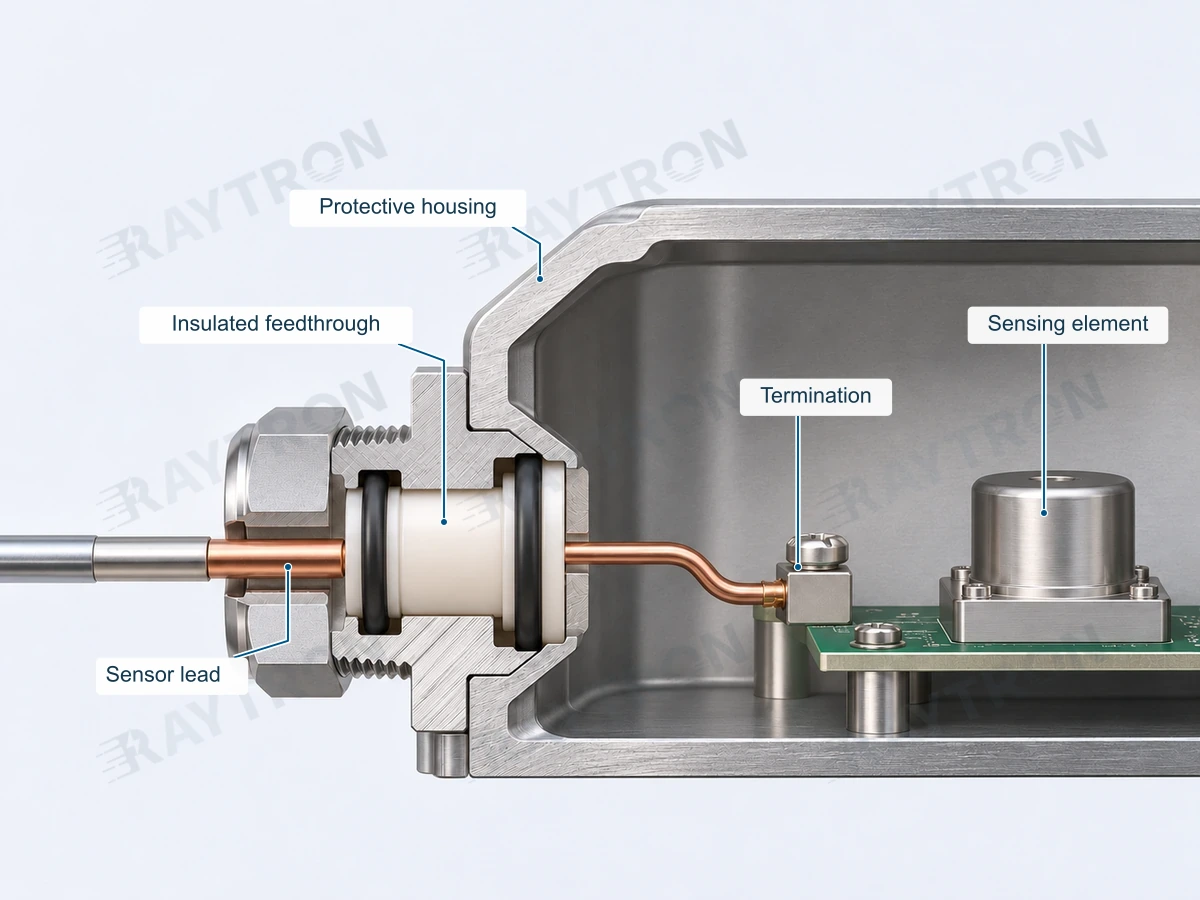
This general sensor route defines medium, concentration, temperature history and cycling. Use the MWD route when the complete assembly also has downhole pressure and chemical requirements.
Related conductor products
Design and testing
- Exposure definition
- Specify chemicals and concentrations, gas or liquid conditions, temperature history, cycling, duration and any pressure boundary of the assembly.
- Construction and interfaces
- Define copper grade, nickel layer construction and ratio basis, geometry, formed or cut edges, insulation and dissimilar-metal joints.
- Assembly acceptance
- Agree resistance stability, surface or corrosion assessment, joint strength and insulation tests as relevant. Use the exact conductor construction and exposure conditions for the sample evaluation.
Application design factors
General environment assessment: separate chemical exposure, temperature cycling and mechanical fatigue. Downhole pressure and media are specified on the MWD page.
Application design record — open worksheet
Record your project requirements and observations, then download or include them in an inquiry.
| Item | Information / units | Your input |
|---|---|---|
| Exposure | Chemical/medium, concentration, temperature profile and exposure duration | |
| Assembly | Round/strand/strip/foil geometry, outer-layer continuity, cut ends and joining/protection | |
| Separate records | Corrosion, thermal-cycle and fatigue methods, acceptance source, sample IDs and measured results |
Other formats and preview
Save or restore a draft
Drafts stay in this browser. Clear inputs also removes the saved draft.
Worksheet version: RT-RFQ-WORKSHEET-1.
How is a conductor selected for a corrosive or hot environment?
Match the nickel layer, conductor geometry and joints to the actual chemical medium, concentration, temperature and duration. Evaluate conductor, insulation and terminations within the intended sensor assembly.