
Engineering application guide
CCAW Voice Coil Wire
Start with the resistance and winding space your voice coil must meet. Copper-clad aluminum (CCA) wire combines an aluminum core, copper surface and specified insulation; evaluate the finished coil on that basis.
Discuss the assembly requirementsOn this page
Specified CCA winding construction
- 1Bare CCA conductor
- 2Enamel insulation
- 3Winding on bobbin and terminals
This page focuses on a specified CCA wire construction and its coil tests. The insulation and termination remain part of the finished coil.
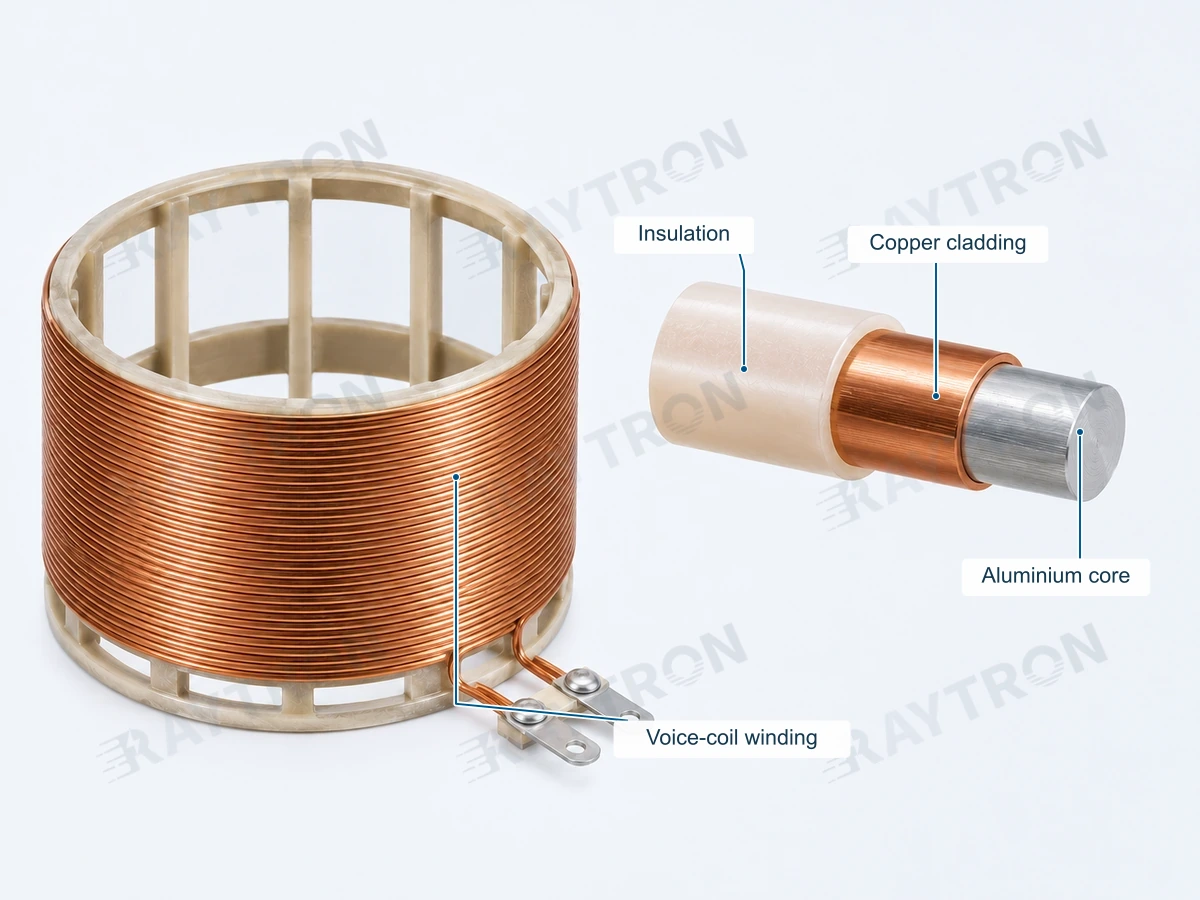
Hold material choice separately from shape: compare copper versus CCA and round versus flat as distinct variables. Use finished resistance, impedance, temperature rise and durability for the coil comparison.
Related conductor products
Design and testing
- Comparison basis
- Fix resistance, winding space, turn count and conductor/insulation dimensions.
- Assembly
- Specify termination, adhesive/cure process, bobbin and heat dissipation.
- Performance tests
- Measure DC resistance, thermal rise, mass, impedance and mechanical durability using the agreed coil and audio duty.
Application design factors
CCA voice-coil design combines conductor resistance, winding geometry, insulation and termination requirements.
Application design record — open worksheet
Record your project requirements and observations, then download or include them in an inquiry.
| Item | Information / units | Your input |
|---|---|---|
| CCA construction | Actual section, core/copper-layer basis, temper and resistance at temperature | |
| Insulation responsibility | Bare or finished envelope, insulation system, build and thermal/electrical test requirements; identify who supplies each process | |
| Coil trial | Turns, winding window, tension, bend direction, termination and acceptance records |
Other formats and preview
Save or restore a draft
Drafts stay in this browser. Clear inputs also removes the saved draft.
Worksheet version: RT-RFQ-WORKSHEET-1.
Which results matter in a CCA voice-coil trial?
Compare finished-coil resistance, impedance, geometry, temperature rise, moving mass and mechanical durability. Conductor dimensions, insulation build and termination design form part of that comparison.