
Enameled Bimetal Conductors
Enameled CCA Round Wire
View specificationsDiscuss your design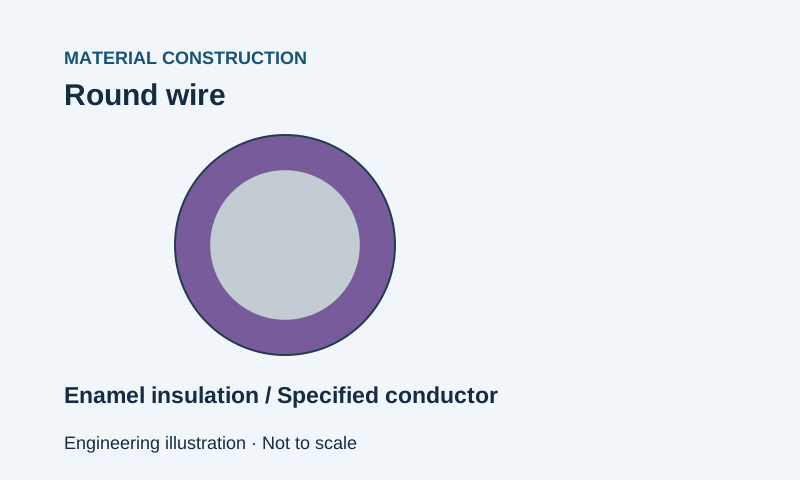
Custom enameled CCA round-wire designs combine a copper-clad aluminum conductor with electrical insulation. Conductor diameter and insulation build define the finished winding wire.
On this page
Construction and specification
Scroll horizontally to read all columns.
| Item | Specification |
|---|---|
| Material construction | Copper-clad aluminum conductor with enamel insulation; copper layer and insulation build perform separate functions |
| Product form | Enameled round wire |
| Target use | Voice coils, inverter inductors, motors and compact windings |
Specification design factors
Engineering inquiry
Geometry and performance
- Diameter and ovality determine the metal section and fit in the finished assembly.
- Resistance depends on material, section, length and temperature.
- Temper and surface condition affect drawing, bending and joining.
Core, cladding and insulation
The aluminum core and copper layer form the electrical conductor. Enamel forms a separate insulation system around it. Bare diameter, finished diameter and termination geometry connect the material to the coil design.
Material and form references
Rolled strip, foil and flat wire are defined by material, temper, section and finished-part requirements. Their geometry and test methods differ from those of round wire.
Standards and product formsProduct questions
What determines a round conductor’s electrical and forming behavior?
Metal construction, diameter and temper define the conductor section. Resistance varies with length and temperature. Surface condition, coating and any insulation affect joining and the finished assembly diameter.
Is copper proportion the same as electrical conductivity?
No. Copper proportion describes a mass, volume or area basis. Conductivity describes electrical behavior under stated measurement conditions. The supplied construction identifies both, together with section, material condition and resistance.
How are bare and insulated dimensions distinguished?
Bare diameter describes the metal conductor. Finished diameter includes the insulation build. The enamel system, thermal class and winding tests belong to the finished insulated construction.
Related products
Prepare your inquiry
- Bare conductor diameter, tolerance and finished diameter if coated or insulated
- Temper, required resistance and termination
- Core and outer-layer metals, each layer or ratio, and mass or volume basis
- Insulation system and build, finished dimensions, winding and thermal requirements
- Quantity, spool or coil format, packaging and delivery destination