
Copper Clad Steel Conductors
Copper-Clad Steel Narrow Foil
View specificationsRequest a quote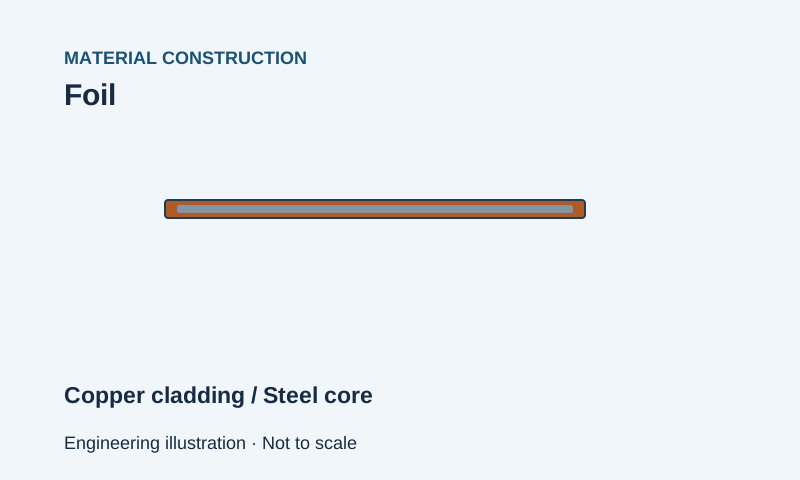
CCS narrow foil combines a steel core with copper cladding in a thin slit form. Specify the strength, electrical and surface requirements for the finished part, together with thickness, slit width and edge condition.
On this page
Construction and specification
Scroll horizontally to read all columns.
| Item | Specification |
|---|---|
| Material construction | Steel core with a copper outer layer |
| Product form | Narrow foil |
| Strength target | Specified by tensile strength, steel core and application load |
| Use environment | Grounding, cable, rail, connector or high-vibration signal use |
Explore the related product details for this material and product form.
Specification design factors
Drawing-defined specification
Geometry and performance
- Gauge, usable width and surface condition define the thin conductor layer.
- Edge quality and winding tension affect tracking and handling.
- Core size and roll build govern unwinding on the downstream equipment.
Selection and processing
Specify the narrow slit width, total gauge, copper layers and allowed burr for the formed part. A grounding-wire construction is not a specification for rolled foil. For shielding, include frequency, continuity and the connection to the enclosure.
Material and form references
Rolled strip, foil and flat wire are defined by material, temper, section and finished-part requirements. Their geometry and test methods differ from those of round wire.
Standards and product formsProduct questions
What affects foil handling and surface performance?
Gauge, usable width and edge quality influence tracking and damage during unwinding. Surface texture and cleanliness affect the downstream bond or contact. Core size, roll build and tension connect the foil to the processing equipment.
Are single-wire strength and complete-strand breaking load the same specification?
No. Single-wire material properties and finished-conductor breaking load describe different specimens. Wire diameter, count, lay and connections define the assembled strand and its test record.
Which dimensions describe foil supplied on a roll?
Specify foil gauge and usable width together with edge condition. The roll record separately identifies core size, roll outside diameter, winding direction and any joints; these are different from foil thickness.
Related products
Prepare your inquiry
- Width, thickness and tolerances
- Edge condition, burr, surface and roll dimensions
- Core and outer-layer metals, each layer or ratio, and mass or volume basis
- Surface finish or coating, joining method and inspection requirements
- Quantity, spool or coil format, packaging and delivery destination