
Copper-Aluminum Composite PV Ribbon & Busbar Ribbon
Copper-Aluminum Composite Round Solar Ribbon
View specificationsRequest a quote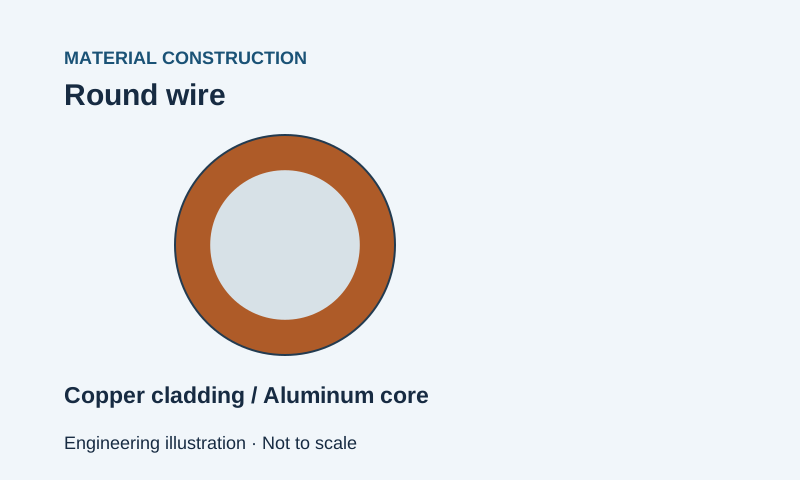
This round solar conductor uses a copper-aluminum composite core with a solderable surface. Specify finished diameter, coating, mechanical properties and spool format for the cell layout and stringer. Compare resistance and module performance with the existing conductor before approving the change.
On this page
Construction and specification
Scroll horizontally to read all columns.
| Item | Specification |
|---|---|
| Material construction | Copper-aluminum composite or specified copper base with the coating defined by the cell process |
| Product form | Round solar wire |
| Surface | Tin or solder coating options by soldering process |
| Packaging | Spool, traverse wound spool or customer-specified package |
Specification design factors
Drawing-defined specification
Geometry and performance
- Diameter and ovality determine the metal section and fit in the finished assembly.
- Resistance depends on material, section, length and temperature.
- Temper and surface condition affect drawing, bending and joining.
Selection and processing
This product has a round section. State bare conductor diameter, roundness, coating thickness and finished diameter, together with mechanical requirements and spool format. Width/thickness ranges for flat ribbon do not define this wire.
Material and form references
Round-wire specifications identify the metal grade, temper, diameter, surface and electrical resistance with its measurement length and temperature. Coating and insulation requirements describe the finished construction separately.
Standards and product formsProduct questions
How does a flat section behave in bending and winding?
Width, thickness and corner geometry define the conductor envelope. Bending about the long and short edges produces different strains and springback. Bare metal and insulated finished dimensions occupy different portions of the available winding space.
Is copper proportion the same as electrical conductivity?
No. Copper proportion describes a mass, volume or area basis. Conductivity describes electrical behavior under stated measurement conditions. The supplied construction identifies both, together with section, material condition and resistance.
How are width and thickness related to the finished part?
The drawing pairs width and thickness and identifies corners, edge condition and temper. Separate width and thickness limits do not establish every combination. A coating or insulation build is recorded separately from the bare metal section.
Related products
Prepare your inquiry
- Bare conductor diameter, tolerance and finished diameter if coated or insulated
- Temper, required resistance and termination
- Core and outer-layer metals, each layer or ratio, and mass or volume basis
- Coating alloy and thickness, soldering conditions, cell layout and spool format
- Quantity, spool or coil format, packaging and delivery destination